Key takeaways
- Compare three laboratory drying ovens for lab upgrades, with chamber sizes, temperature ranges and controller details taken from their Amazon listings.
Upgrading a laboratory drying oven is rarely about chasing a higher maximum temperature. The real decision is whether the new unit dries the loads your lab actually runs, holds its set point through a full working day, and fits the bench and circuit it has to live with. An oven that is too small turns glassware drying into a queue, while an oversized chamber wastes bench space and heats air nobody needs.
This shortlist is for lab managers replacing an aging unit, technicians setting up a new bench, and teaching labs that need a second oven for overflow work. Every model below is a laboratory drying oven sold on Amazon US, and each one was chosen from the temperature range, chamber size and control details stated in its own product listing.
Quick Picks
As an Amazon Associate we earn from qualifying purchases.
| Product | Best for | Key spec from title |
|---|---|---|
| SODONAD 45L Horizontal Blast Drying Oven | Routine glassware and sample drying in a mid-size lab | 45L chamber, up to 300°C |
| sertheha 101-0AB Lab Drying Oven 45L | Labs that want the standard 101-series benchtop format | Model 101-0AB, RT+10°C to 300°C |
| WEIZIIA 16L Compact Drying Oven | A compact second oven on a crowded bench | 16L chamber, 50°C to 280°C |
How to Choose
Forced Air or Gravity Convection
Forced air ovens use a fan to circulate heated air through the chamber, which evens out the temperature between shelves and shortens drying times for wet glassware and dense loads. Gravity convection units have no fan, so air moves slowly and gently; that suits powders and light samples that a fan would disturb, but recovery after opening the door is slower. For a general laboratory upgrade, forced air is the safer default because most mixed workloads benefit from the uniformity. Choose gravity convection only when your samples are easily blown around or when a fan is a contamination concern in your workflow.
Chamber Size and Shelf Load
Match the chamber to the largest load you dry in a normal week, not the largest load you can imagine. A 45 litre oven handles several trays of glassware or sample containers at once, while a 16 litre unit is a single-batch oven for a small bench. Check the shelf arrangement in the listing as well: adjustable trays matter when tall flasks and shallow dishes share the same run. Also note any stated load rating per tray, because a shelf full of wet glassware is heavier than it looks, and overloading a tray is a quiet way to damage both the shelf and the samples.
Temperature Range and the Controller
Most laboratory drying work happens between 50°C and 200°C, so a ceiling of 250°C to 300°C covers drying, baking and dry heat treatment with room to spare. What separates ovens in daily use is the controller. A digital controller with a timer lets a run finish on schedule instead of relying on someone remembering to switch the oven off, and a stated temperature fluctuation figure tells you how tightly the chamber holds its set point. Button controls below a display are easier to use with gloved or wet hands than a bare touchscreen, a small detail that matters at a busy sink-side bench.
Power Draw and Bench Placement
A benchtop drying oven is a serious electrical load, and the listing’s wattage and voltage decide where it can go. A 1000W, 110V unit runs on a standard laboratory circuit, but it should not share that circuit with another heater, a water bath or a centrifuge running at the same time. Leave clearance around the cabinet for ventilation, keep the top vent unobstructed, and measure the bench depth before ordering, because a 45 litre oven is deeper than most people expect. If the listing offers several voltage or capacity variants, confirm the exact variant on the product page before the order is placed.
The 3 Best Options
SODONAD 45L Horizontal Blast Drying Oven

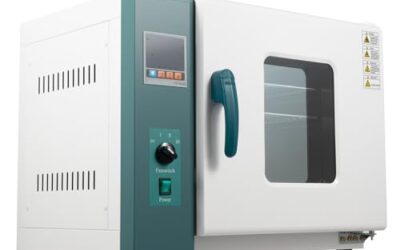
This horizontal forced air oven is the straightforward upgrade for a lab whose old unit can no longer keep up with daily glassware and sample drying. The 45 litre chamber takes two adjustable trays, and the listing rates each tray for loads up to 33 pounds, which suits stacked dishes and containers. Its temperature ceiling of 300°C covers the full spread of routine drying and baking work, and the button controls below the display are practical when your hands are wet from the sink. A timer function rounds out a specification aimed at shared benches where runs need to start and stop predictably.
Specs
- Capacity: 45L / 12 gal
- Power: 1000W
- Voltage: 110V
- Maximum temperature: 572°F (300°C), minimum 18°F above room temperature
- Heating method: forced air convection
- Shelves: 2 adjustable trays, rated up to 33 lb each in the listing
- Timer function available
- Materials listed: cold plate and stainless steel
Best for: A mid-size lab replacing its main benchtop oven for daily glassware and sample drying.
Watch out for: Confirm the tray load rating and chamber dimensions on the product page if you dry heavy stacked loads.
ASIN: B0DPHG2J32
sertheha 101-0AB Lab Drying Oven 45L

The 101-0AB is the standard benchtop format behind many laboratory drying ovens, and this listing presents it in a 45 litre, 110V configuration for US benches. The temperature range runs from 10°C above room temperature up to 300°C, which spans gentle warming through full dry heat work. Button control keeps the interface simple for shared use, and the 1000W draw is in line with what a normal laboratory circuit supplies. For a lab upgrading from an older 101-series unit, this is the closest like-for-like replacement in the group, with familiar sizing and a digital set point instead of a worn analog dial.
Specs
- Model: 101-0AB
- Capacity: 45L / 12 gal
- Power: 1000W
- Voltage: 110V
- Temperature range: RT+10°C to 300°C (RT+18°F to 572°F)
- Control type: button control
Best for: Labs replacing an older 101-series oven that want the same footprint with digital control.
Watch out for: The listing is brief, so verify shelf count and chamber dimensions on the product page before ordering.
ASIN: B0DK539497
WEIZIIA 16L Compact Drying Oven

A full-size oven is the wrong answer when the upgrade is really about adding capacity in one corner of the lab. This 16 litre unit is a compact constant temperature oven for single batches: a teaching bench, a preparation room, or a second station for small sample loads that should not wait behind the main oven’s glassware. The microcomputer controller uses PID control with timing, alarm and temperature calibration functions, and the listing states a temperature fluctuation of plus or minus 1°C. Its 500W draw in this size is also gentler on a shared circuit than the larger ovens above.
Specs
- Capacity: 16L (the listing also carries a larger variant)
- Power: 500W in the 16L configuration
- Temperature control range: 50°C to 280°C
- Temperature fluctuation: ±1°C
- Temperature uniformity: ≤±3°C, as stated in the listing
- Timer range: 1 to 9999 minutes
- Controller: microcomputer PID with timing, alarm and calibration functions
- Lining material: high-quality galvanized, per the listing
Best for: A compact second oven for small batches, teaching benches and preparation rooms.
Watch out for: The listing covers more than one capacity and voltage variant, so select the 16L, 110V configuration on the product page.
ASIN: B0FDKLJLYH
Which One Fits Your Situation
Replacing the Main Oven in a Working Lab
Choose the SODONAD 45L if one oven has to carry the whole lab’s drying. Its chamber swallows the daily glassware load, the tray rating suits stacked containers, and forced air circulation keeps drying times short between runs. It is the only pick here sized and specified as a primary oven rather than a supplement.
Swapping an Old 101-Series Unit Like for Like
The sertheha 101-0AB keeps the footprint and capacity your bench is already arranged around, so shelving, trays and habits carry over. Pick it when the upgrade is about retiring a tired controller and worn seals, not about changing how the lab works. Confirm the shelf details on the listing first, since its product page is the briefest of the three.
Adding a Second Oven Without Rearranging the Bench
The WEIZIIA 16L fits where a 45 litre cabinet will not, and its modest power draw makes it easier to place on an existing circuit. It suits a preparation room or teaching bench that runs small, frequent batches. Accept the trade-off: one batch at a time, and a lower 280°C ceiling than the larger ovens.
Equipping a Teaching or Shared Laboratory
Shared labs need controls that survive many hands and runs that end on time. The SODONAD’s button controls and timer suit student benches, while the WEIZIIA’s programmable timing and alarm functions help a technician supervise several stations at once. Either way, post the maximum load and temperature rules on the oven door from day one.
Common Mistakes
- Buying on maximum temperature alone, when chamber size and shelf layout decide whether daily loads actually fit.
- Placing the oven on a circuit shared with other heaters, then blaming the oven for tripped breakers.
- Ignoring listing variants and ordering the wrong voltage or capacity configuration.
- Drying solvent-wet samples in a standard drying oven that is not rated for flammable vapors.
- Blocking the top vent or pushing the cabinet flush against a wall, which disturbs airflow and temperature uniformity.
Safety Checks for High-Temperature Work
A drying oven holds several hundred degrees for hours at a time, so treat the upgrade as a safety change as well as a capacity change. Never dry samples soaked in flammable solvents in a standard laboratory drying oven; those loads belong in equipment rated for that vapor load. Keep paper, plastic storage and solvent bottles away from the cabinet, leave the clearances the manual specifies, and let the chamber cool before unloading, using heat-resistant gloves for trays. Run the first full-temperature cycle empty and supervised, confirm the over-temperature behavior matches the listing’s description, and add the oven to the lab’s inspection routine so door seals, vents and the power cord are checked on a schedule.
Frequently Asked Questions
Is a 45 litre oven big enough for a small laboratory?
For most small labs, yes. A 45 litre chamber with two adjustable trays handles the daily flow of glassware, sample trays and containers for a handful of benches. Labs that dry bulky items or run several large batches in parallel should step up in size or add a second compact oven rather than overload one chamber.
What temperature range does laboratory drying actually need?
Routine drying, baking and dry heat treatment sit between about 50°C and 250°C. All three ovens here reach at least 280°C, which leaves headroom above normal work. The more useful figure is how steadily the oven holds a set point, which is why the stated fluctuation and the controller type matter more than the ceiling.
Can a drying oven sterilize laboratory glassware?
Dry heat in these ovens is used for drying and heat treatment, and listings describe baking and sterilizing among their applications. Whether a specific run counts as sterilization depends on the temperature, the duration and your institution’s protocol, so follow your laboratory’s own validated procedure rather than treating the oven’s maximum temperature as a guarantee.
What should be checked before the new oven is plugged in?
Confirm the ordered variant matches your supply voltage, check the circuit can carry the oven’s wattage alongside everything else on it, and measure the bench space including ventilation clearance. Then run an empty supervised cycle to the temperature your lab uses most, and verify the display against a reference thermometer before the first real load.