Our Short List of 3

- Best for: Hunters who dial elevation or shoot across open ground and want holdover marks as a backup method.
- Magnification: 3-15x
- Objective lens: 44mm
- Reticle: Ballistic E3 Illuminated (MOA), rear focal plane
- Main tube: 1 in
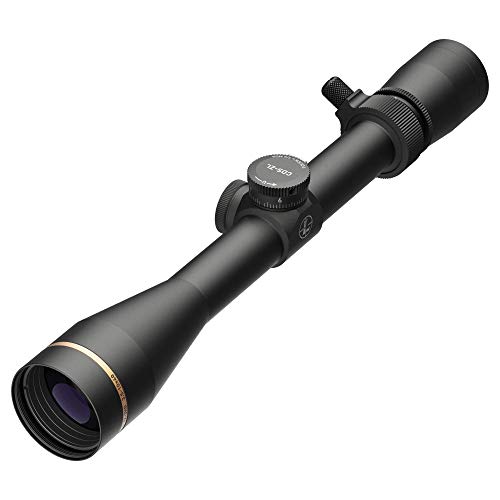
- Best for: Deer hunters in timber and mixed cover who zero once, then dial a custom yardage dial for the occasional longer shot.
- Magnification: 3.5-10x
- Objective lens: 40mm
- Reticle: Duplex
- Main tube: 1 in

- Best for: Stand and blind hunters whose shots come in the first and last minutes of legal light.
- Magnification: 3.5-10x
- Objective lens: 50mm
- Main tube: 30mm
- Reticle: Illuminated FireDot Twilight Hunter, second focal plane
All 3 Picks at a Glance
| Product | Specs | Action |
|---|---|---|
| Burris Signature HD 3-15×44 Illuminated Ballistic E3 |
| Check price on Amazon |
| Leupold VX-3HD 3.5-10×40 CDS-ZL Duplex |
| Check price on Amazon |
| Leupold VX-3HD 3.5-10×50 CDS-ZL Illuminated FireDot Twilight Hunter |
| Check price on Amazon |
Key takeaways
- Three upper-tier hunting scopes compared on the specs that decide a shot: magnification, objective size, reticle illumination and locking dial systems.
At this level, basic clarity stops being the question, because every scope in this group resolves detail well. The real decision is where the engineering effort went: brightness for the first and last minutes of legal light, or magnification and dialing hardware for open country. A scope that is perfect on a bean field can be the wrong tool in dark timber, and the listings make those trade-offs plain if you read the specification tables instead of the headlines.
This comparison is for three kinds of hunters: the deer hunter in timber who needs speed at close range, the open-country hunter who may dial or hold for a long shot, and the stand hunter whose chances come in dim light. Every pick below was chosen from the names and specification data on its Amazon listing, and the three finalists split cleanly along those lines: one reach-first Burris and two Leupolds that divide the woods and low-light work between them.
Quick Picks
As an Amazon Associate we earn from qualifying purchases.
| Product | Best for | Key spec from title |
|---|---|---|
| Burris Signature HD 3-15×44 | Open country and longer shots | 3-15×44, Ballistic E3 illuminated reticle |
| Leupold VX-3HD 3.5-10×40 | Woods deer rifle, light carry | 3.5-10×40, CDS-ZL ZeroLock dial |
| Leupold VX-3HD 3.5-10×50 | First and last light on stand | 3.5-10×50, FireDot Twilight Hunter reticle |
How to Choose
Match the Magnification Range to Your Ground
Start with the longest shot your ground honestly presents, then work backwards. Timber and brush hunters rarely stretch past 150 yards, and a 3.5x low end keeps the field of view wide enough to find a deer moving between trees. Open fields, coulees and cutovers reward a higher top end, which is where the Burris earns its place with 15x on tap. Remember that cranking magnification shrinks both field of view and exit pupil, so the setting that helps at noon can hurt at dusk. Buy the range you will use weekly, not the one you might use once.
Objective Size Decides the Last Minutes
The objective diameter sets how much light the scope can gather, and the clearest way to feel it is exit pupil: divide the objective size by the magnification. The 50mm Leupold at 10x gives a 5mm exit pupil, while a 40mm scope at the same setting gives 4mm, a difference your eye notices in the final minutes of shooting light. Coatings matter alongside raw size, which is why the Leupold listings name their Elite Optical System. Bigger glass is not free, though: a 50mm objective sits higher over the bore, needs taller rings, and adds ounces on a rifle carried all day.
Pick a Reticle That Matches How You Aim
A plain Duplex, like the one in the 3.5-10×40 Leupold, is fastest when distances are known and shots stay inside a comfortable zero. The Burris Ballistic E3 adds holdover marks below the center crosshair for hunters who hold over instead of dialing. Because that reticle sits in the rear focal plane, its marks line up at one reference magnification, so confirm the setting the listing intends. Illumination is a separate decision: the FireDot’s lit center dot stays visible against dark timber and shadowed bodies, but it runs on a CR2032 battery that belongs on your pre-season checklist.
Dials, Locks and Tube Size
If you plan to dial for distance, the turret system matters more than the click figure, though all three scopes here click in quarter-MOA steps. The Leupold CDS-ZL locks with a push button and accepts a custom yardage dial built for your load. The Burris answers with tall push-and-pull locking knobs and a zero stop, so returning to your zero is a physical stop rather than a memory exercise. Check the adjustment travel printed on each listing against the drops you expect, and confirm tube diameter, 1 inch or 30mm, against the rings already on your rifle.
The 3 Best Options
Burris Signature HD 3-15×44 Illuminated Ballistic E3
- Best for: Hunters who dial elevation or shoot across open ground and want holdover marks as a backup method.
- Magnification: 3-15x
- Objective lens: 44mm
- Reticle: Ballistic E3 Illuminated (MOA), rear focal plane
- Main tube: 1 in
Hunters who dial elevation or shoot across open ground and want holdover marks as a backup method.
The holdover marks sit in the rear focal plane, so they line up at one reference magnification only; confirm that setting before relying on them past your zero.
The Burris is the reach pick of this group, built around a 3-15x range that starts low enough for timber and tops out where open-country shots begin. Its Ballistic E3 reticle carries holdover marks for hunters who hold rather than dial, and the illuminated center section keeps the aim point visible against shadowed bodies. Tall push-and-pull locking knobs with a zero stop suit shooters who do dial, while side parallax from 25 yards to infinity keeps the picture settled at the top end. It is the heaviest scope here, a fair trade for the widest working range.
Leupold VX-3HD 3.5-10×40 CDS-ZL Duplex
- Best for: Deer hunters in timber and mixed cover who zero once, then dial a custom yardage dial for the occasional longer shot.
- Magnification: 3.5-10x
- Objective lens: 40mm
- Reticle: Duplex
- Main tube: 1 in
Deer hunters in timber and mixed cover who zero once, then dial a custom yardage dial for the occasional longer shot.
The Duplex has no holdover marks, so past your zero you are dialing or estimating; the 40mm objective also gives up some brightness at full 10x compared with the 50mm model below.
This is the traditional deer-rifle configuration done thoroughly: a 3.5-10×40 on a 1-inch tube with a plain Duplex reticle and an aluminum body. The headline feature is the CDS-ZL elevation dial, which locks with a push button so it cannot wander in a pack or against a stand rail, and the Custom Dial System lets you order a dial marked in yards for your own load. Leupold’s Elite Optical System handles the dawn and dusk brightness, and a removable throw lever speeds up magnification changes with gloves on.
Leupold VX-3HD 3.5-10×50 CDS-ZL Illuminated FireDot Twilight Hunter
- Best for: Stand and blind hunters whose shots come in the first and last minutes of legal light.
- Magnification: 3.5-10x
- Objective lens: 50mm
- Main tube: 30mm
- Reticle: Illuminated FireDot Twilight Hunter, second focal plane
Stand and blind hunters whose shots come in the first and last minutes of legal light.
The 50mm objective and 30mm tube need medium or high rings on many rifles, so check bolt-handle and barrel clearance before ordering rings; illumination also depends on a coin battery, so carry a spare CR2032.
Choose this one when your season is decided in dim light. The 50mm objective feeds a bright picture at 10x, and the FireDot Twilight Hunter reticle puts an illuminated center dot on dark hides and shaded vitals where plain crosshairs fade. Motion Sensor Technology switches the illumination off after five minutes without movement and wakes it when the rifle moves, stretching the CR2032 battery across a season. It shares the CDS-ZL locking dial with its 40mm sibling but rides in a 30mm tube and carries fixed parallax set at 150 yards.
Which One Fits Your Situation
Timber, Brush and Short Shooting Lanes
Take the Leupold VX-3HD 3.5-10×40. Its 3.5x low end keeps both eyes useful when a deer steps out at forty yards, the plain Duplex comes to the eye without thought, and the lighter 1-inch format carries well on a rifle that spends the day in your hands. The CDS-ZL dial stays locked until a rare clearing shot asks for a deliberate turn.
Open Country and Shots Across Fields
The Burris Signature HD 3-15×44 is built for this ground. Fifteen power at the top end, side parallax that settles the reticle on distant targets, and tall locking knobs with a zero stop make dialing a repeatable routine rather than a guess. When the wind or the range call changes your plan, the Ballistic E3 holdover marks give you a second way to aim without touching a turret.
Sitting a Stand or Blind Until Dark
Take the Leupold VX-3HD 3.5-10×50 with the FireDot reticle. The larger objective keeps the picture bright at full power in the last legal minutes, and the illuminated center dot holds its place on a deer standing in shadow at the field edge. Motion Sensor Technology means the dot is lit when you raise the rifle and asleep while you wait, so the battery is not spent on an empty field.
One Rifle That Hunts Everything
If a single scope has to cover a season that mixes woods, fields and the occasional long poke, the Burris 3-15×44 spans the widest ground of the three, from 3x at the bottom to 15x at the top. Hunters who walk more than they sit should look hard at the 3.5-10×40 Leupold instead: it gives up reach it rarely misses and keeps the rifle noticeably handier.
Common Mistakes
- Choosing magnification for the longest shot you can imagine instead of the ground you actually hunt, then fighting a narrow field of view and a dim picture when a close deer appears at dusk.
- Mounting a 50mm objective on the lowest rings in the drawer and finding barrel or bolt-handle contact at the first range session; check clearance against the listing’s tube and objective figures first.
- Trusting holdover marks at every magnification on a rear focal plane reticle; those marks are spaced for one reference setting, and using them at another power shifts your aim point quietly.
- Dialing for a long shot without a locking dial or zero stop, then losing count of the turns on the way back and carrying a wrong zero for the rest of the hunt.
- Leaving an illuminated reticle on its pre-season battery; a spare CR2032 in the pack weighs nothing, and a dead dot at last light turns a strength into a distraction.
Frequently Asked Questions
Is 3.5-10x enough magnification for deer hunting?
For the distances most deer are taken, yes. Ten power shows clear detail well past the range at which most hunters should be shooting, and the 3.5x low end keeps the view wide in timber. Hunters whose ground regularly presents shots past 300 yards are the ones who benefit from the Burris and its 15x top end.
What does the CDS-ZL dial on the Leupold scopes do?
Two jobs. The ZeroLock half is a push-button lock that keeps the elevation dial from turning accidentally in a pack, on a sling, or against a stand rail. The Custom Dial System half lets you order a replacement dial engraved with yardage marks matched to your rifle and load, so in the field you dial the distance instead of counting MOA clicks.
Does an illuminated reticle help during legal shooting light?
It helps most at the edges of the day. In bright midday conditions the FireDot adds little, and many hunters leave it off. Against dark timber, shaded hollows and a deer standing in shadow at dusk, the lit center dot stays visible when plain black crosshairs wash out, which is exactly the moment the 50mm Leupold is built for.
Should I choose a 1-inch or a 30mm main tube?
Start with the rings you already own, because the tube figure on the listing has to match them. A 30mm tube, like the one on the 50mm Leupold, generally carries more internal adjustment travel and pairs with larger objectives. One-inch scopes are lighter and fit the widest ring selection. Neither choice changes the glass; it changes mounting and dialing room.