Our Short List of 3

- Best for: Riders heading to shows, parades, and rodeos who want a premium wool show blanket.

- Best for: Riders who want a pad that performs at home and looks good enough for the show ring.
- Best for: Trail riding and horses with a swayback or dipped topline that need a pad shaped to the back.
All 3 Picks at a Glance
| Product | Specs | Action |
|---|---|---|
| 1. Tahoe Tack Reya Western Show Saddle Blanket |
| Check price on Amazon |
| 3. CHALLENGER Contoured Wool Felt Saddle Pad |
| Check price on Amazon |
| 5. Weaver Leather Flex Contour Wool Blend Felt Saddle Pad |
| Check price on Amazon |
Key takeaways
- Discover the best saddle blankets for horses: wool, woven and contoured pads compared by size, material, fit and care to keep your horse comfortable every day.
A good saddle blanket does far more than add color under your saddle. It cushions your horse’s back, wicks away sweat, spreads pressure from the saddle tree, and helps keep the saddle from slipping during a long ride. Choose the wrong one and you can end up with a sore-backed horse and a saddle that rolls. Choose well and the blanket becomes a piece of tack you reach for every ride without a second thought.
Riders use the phrase “saddle blanket” for two closely related styles: thin woven blankets that fold over a pad or sit directly under the saddle, and thicker felt pads that provide the cushioning themselves. This guide covers both, because most riders mix and match them, layering a woven blanket over a felt pad for shows or using a thick felt pad alone for daily work. Below you will find the best saddle blankets for horses compared by material, size, thickness, fit, and care, so you can match a blanket to your horse, your saddle, and the way you ride.
Disclosure: As an Amazon Associate, we earn from qualifying purchases.
Quick Picks at a Glance
| Product | Key Spec | Best For |
|---|---|---|
| Tahoe Tack Reya Western Show Saddle Blanket | 100% New Zealand wool, 34 x 38 inches, over 5 lbs | Shows, parades, and layering |
| Diamond Wool Contour Felt Ranch Pad | 1-inch wool felt, 32 x 32 inches, wither relief notch | Daily ranch and heavy work |
| CHALLENGER Contoured Wool Felt Saddle Pad | 1-inch 100% heavy wool felt, 32 x 30 inches | Show-ring looks on a budget |
| Weaver Equine Single Weave Saddle Blanket | Single weave, 30 x 60 inches, lightweight | Everyday riding and color |
| Weaver Leather Flex Contour Wool Blend Felt Saddle Pad | 1-inch wool blend felt, 32 x 34 inches | Contoured fit and trail riding |
How to Choose the Best Saddle Blanket for Horses
1. Material: wool, wool blend, or acrylic
Wool breathes, wicks moisture, compresses and rebounds under pressure, and molds to the horse’s back over time. Pure wool blankets, such as handwoven New Zealand wool, regulate temperature best and suit horses that run hot. Wool blend felt adds durability and holds its shape, often at a lower cost. Acrylic blends are the easiest to care for and the most colorfast, but they manage moisture less well than wool, so they suit light work and dry climates better than hard, sweaty rides.
2. Thickness and cushioning
A 1-inch wool felt pad gives serious shock absorption for roping, ranch work, and colt training, while a 3/4-inch pad suits lighter daily riding. Very thick pads can change how your saddle fits, lifting it and narrowing the gullet, so match thickness to your saddle’s fit rather than assuming thicker is always better. Woven blankets are thin by design and are meant to be layered over a pad or used on their own for light rides.
3. Size and coverage
A blanket should extend about 1 to 2 inches beyond the skirt on every side, protecting the horse’s back from the saddle’s edges. Standard western sizes run around 30 x 30 inches or 32 x 32 inches, while oversized show blankets reach 34 x 38 inches and long woven blankets measure 32 x 64 inches when unfolded. Too small a blanket leaves the back exposed to rubs; too large a blanket bunches under the rigging.
4. Shape: contoured, cutback, or straight
A contoured blanket follows the curve of the spine and dips at the withers, keeping pressure off the withers and helping stop the saddle from rolling. Look for a wither relief notch or a cutback front if your horse is high-withered or narrow-built. Straight, square blankets work well on round-backed, mutton-withered horses and are the classic choice for show blankets that fold neatly over a pad.
5. Wear leathers and spine reinforcement
The spine and the cinch area take the most abuse. Top-grain or distressed leather wear leathers protect the blanket where the rigging rubs, and a reinforced spine keeps it from splitting along its fold. These details matter most on pads you will use daily, and they signal that the maker expects the blanket to last through seasons of work rather than a single show season.
6. Care and durability
Wool felt pads are usually hand-washed or spot-cleaned and air-dried, and they can hold dust and odor if they are not brushed out after rides. Woven acrylic blankets are typically the easiest to wash and dry quickly. Before buying, check the care instructions and be honest about how much maintenance you will actually do: a blanket that is hard to clean gets used dirty, and a dirty blanket is a fast route to saddle sores.
Top Picks
1. Tahoe Tack Reya Western Show Saddle Blanket
- Best for: Riders heading to shows, parades, and rodeos who want a premium wool show blanket.
Riders heading to shows, parades, and rodeos who want a premium wool show blanket.
The Tahoe Tack Reya is the blanket to reach for when you want to look your best in the show pen. It is handwoven from 100 percent New Zealand wool, a fiber prized for breathability, moisture wicking, and the way it compresses and rebounds under a saddle. At 34 x 38 inches it is oversized, giving generous coverage for larger saddles and plenty of blanket to show around the skirt, and at over 5 lbs it is a true heavyweight that sits flat, stays put, and absorbs impact. The vibrant handwoven pattern is made to be seen, which is why this blanket is a favorite for shows, parades, and rodeos, and it layers neatly over a felt pad for extra cushioning under a beautiful top layer.
Pros:
– 100 percent handwoven New Zealand wool for breathability and moisture wicking
– Oversized 34 x 38 inch cut gives full coverage and a striking show outline
– Heavyweight build over 5 lbs stays in place and absorbs shock
– Layers well over a felt pad for combined cushioning and style
Cons:
– Heavyweight build is more than light trail riding needs
– Wool requires hand washing and careful drying
– Oversized cut may overwhelm smaller saddles and ponies
2. Diamond Wool Contour Felt Ranch Pad
The Diamond Wool Contour Felt Ranch Pad is a workhorse built for daily ranch riding. It is made in the USA from 1-inch thick wool felt, which delivers natural shock absorption and breathability while molding to the horse over time. The 32 x 32 inch square suits most full-size western saddles, and the contoured spine with a wither relief notch helps the pad sit correctly instead of pressing on the withers. Distressed leather reinforcement along the spine and wear areas adds toughness where the rigging rubs, and at 5 lbs it has enough heft to stay settled under the saddle during roping and colt training.
Pros:
– Thick 1-inch wool felt cushions hard ranch work and roping
– Contoured spine with wither relief notch improves fit and wither clearance
– Distressed leather reinforcement protects high-wear areas
– Handcrafted in the USA from domestic wool felt
Cons:
– Wool felt gathers dust and can hold odor without regular cleaning
– Plain look compared with colorful woven show blankets
– 5 lb weight adds bulk for riders who prefer a lighter pad
Best for: Daily ranch work, roping, and colt training where cushioning and durability matter most.
3. CHALLENGER Contoured Wool Felt Saddle Pad
- Best for: Riders who want a pad that performs at home and looks good enough for the show ring.
Riders who want a pad that performs at home and looks good enough for the show ring.
The CHALLENGER contoured wool felt pad brings show-ring polish to a working pad. It is made from 100 percent heavy wool felt, 1 inch thick, that stays soft and conforms to the horse’s back with little break-in time. The contoured cut follows the natural shape of the back and withers, helping to prevent slipping and to wick away heat and moisture. At 32 inches on the spine with a 15-inch drop, it fits most western saddles neatly, and the hand-tooled floral design with top-grain wear leathers gives it a polished look that holds up in the show pen. The pad weighs about 4 lbs, a solid middleweight that cushions without feeling bulky.
Pros:
– 100 percent heavy wool felt conforms to the back with little break-in
– Contoured shape with wither relief keeps the saddle stable
– Hand-tooled floral design and top-grain wear leathers look show-ready
– 1-inch thickness cushions while still fitting standard saddles
Cons:
– Wool felt needs brushing out and airing to avoid odor buildup
– Decorative tooling needs care to keep it looking sharp
– Only one thickness option, so saddle fit must already be close
4. Weaver Equine Single Weave Saddle Blanket
The Weaver Equine Single Weave Saddle Blanket is the classic lightweight woven blanket that belongs in every tack room. At 30 x 60 inches it is a long, single-weave blanket that folds to fit under a western saddle, giving you a clean layer of protection without the bulk of a felt pad. The single weave keeps it light and flexible, so it drapes well, stays comfortable on all-day rides, and works nicely layered over a pad for extra style. It comes in assorted colors and designs, which makes it easy to match your tack. Because it is thin, it is best paired with a pad for hard work or used on its own for light riding.
Pros:
– Lightweight single weave drapes well and adds no bulk under the saddle
– Long 30 x 60 inch size folds to suit most western saddles
– Wide choice of colors and designs to match your tack
– Easy-care woven construction suits everyday use
Cons:
– Thin weave provides little cushioning on its own for hard work
– Needs a felt pad underneath for roping or heavy ranch riding
– Color and pattern vary, so the exact design you receive may differ
Best for: Everyday riding, layering over a felt pad, and riders who want color and pattern options.
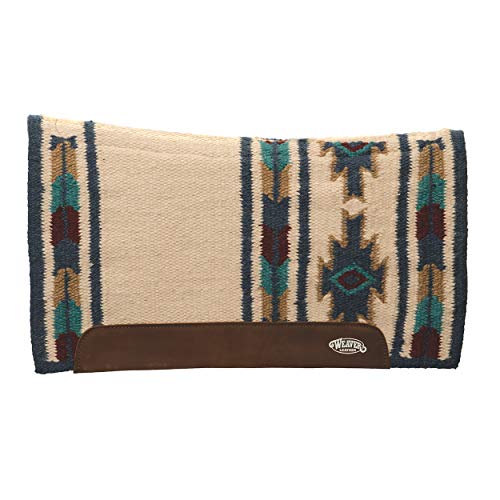
5. Weaver Leather Flex Contour Wool Blend Felt Saddle Pad
- Best for: Trail riding and horses with a swayback or dipped topline that need a pad shaped to the back.
Trail riding and horses with a swayback or dipped topline that need a pad shaped to the back.
The Weaver Leather Flex Contour pad is built around fit. Its contoured shape is cut to follow the horse’s back, which reduces saddle roll and keeps the pad locked in place, while the 1-inch thick wool blend felt provides dense cushioning and moisture-wicking action. A tightly woven wool topper adds durability and a finished look, and premium wear leathers protect the areas where the cinch and rigging rub hardest. At 32 x 34 inches it offers a little extra length for saddles with longer skirts, and the flex contour design suits horses with swayback or a dipped topline, where a flat pad tends to bridge and create pressure points.
Pros:
– Contoured flex shape reduces saddle roll and improves fit on dipped backs
– 1-inch wool blend felt cushions and wicks moisture on long rides
– Tightly woven wool topper and premium wear leathers add durability
– Generous 32 x 34 inch size suits longer saddle skirts
Cons:
– Wool blend felt needs spot cleaning rather than machine washing
– 1-inch thickness can change saddle fit on an already snug saddle
– Contoured cut may not suit very round, mutton-withered horses
Comparison Table
| Product | Material | Size | Thickness / Weight | Shape |
|---|---|---|---|---|
| Tahoe Tack Reya | 100% New Zealand wool | 34 x 38 inches | Over 5 lbs | Oversized show cut |
| Diamond Wool Contour Felt Ranch Pad | Wool felt | 32 x 32 inches | 1 inch, 5 lbs | Contoured, wither relief notch |
| CHALLENGER Contoured Wool Felt | 100% heavy wool felt | 32 x 30 inches | 1 inch, about 4 lbs | Contoured |
| Weaver Equine Single Weave | Single weave woven blanket | 30 x 60 inches | Lightweight | Long fold-over blanket |
| Weaver Leather Flex Contour | Wool blend felt | 32 x 34 inches | 1 inch | Flex contoured |
Buying Guide
Start with your saddle, not the blanket. Measure the skirt length and width, check the gullet width and bar spread, and note whether your saddle tends to roll or sit forward. A blanket that is too thick can lift a well-fitting saddle and pinch the withers, while a blanket that is too thin leaves a wide-tree saddle rocking on the horse’s back. If your saddle fit is borderline, talk to a saddle fitter before buying a thick pad to compensate, because no blanket fixes a saddle that does not fit.
Next, match the blanket to the work. Daily ranch riding, roping, and colt training call for a 1-inch wool felt pad with wear leathers and a contoured spine, such as the Diamond Wool or CHALLENGER pads above. Trail riding over long miles favors a contoured pad that resists rolling, such as the Weaver Flex Contour. Shows and parades are where a handwoven wool blanket like the Tahoe Tack Reya earns its keep, layered over a pad for cushioning and style together. Light everyday riding is the home of the woven blanket, which protects the back and adds color without bulk.
Think about climate and care as well. Wool manages sweat and heat better than acrylic, which matters on hard rides in warm weather, but wool needs hand washing and air drying, and it holds dust if it is not brushed out. Acrylic and wool blend blankets dry faster and tolerate more casual care, which suits busy barns. Keep at least two blankets in rotation so one can dry fully between rides, and always check the underside for burrs and dried sweat before saddling, since grit trapped under a blanket is a common cause of sores.
Common mistakes include buying for color before fit, layering so many pads that the saddle no longer sits level, and using a show blanket for daily muddy work until its weave is ruined. A blanket should extend slightly beyond the saddle skirt and lie flat with no folds under the tree.
Frequently Asked Questions
What is the difference between a saddle blanket and a saddle pad?
A saddle blanket is usually a thin woven blanket that folds under the saddle or layers over a pad, while a saddle pad is a thicker felt or foam pad that provides the cushioning itself. Riders often use both together, with the blanket on top for style and the pad underneath for shock absorption.
How thick should a saddle blanket be?
For most western riding, a 1-inch wool felt pad suits heavy work such as ranch riding and roping, while a 3/4-inch pad is enough for light daily riding. Woven blankets are thin by design and rely on a pad underneath for cushioning. The right thickness depends on your saddle fit, so a thicker pad is not automatically better.
How do I measure my horse for a saddle blanket?
Measure your saddle skirt first, then choose a blanket that extends about 1 to 2 inches beyond the skirt on all sides. Standard western blankets run around 30 x 30 or 32 x 32 inches, and oversized show blankets reach 34 x 38 inches. Also consider your horse’s wither height, since high-withered horses need a contoured cut or wither relief notch.
Can I wash a wool saddle blanket?
Most wool saddle blankets and felt pads should be hand washed in cold water with a gentle cleaner, then dried flat away from direct heat. Avoid machine washing and tumble drying, which can shrink wool felt and distort the shape. Brush dried sweat and dust out of felt pads after every ride to keep them fresh between washes.
How often should I replace a saddle blanket?
Replace a blanket when the felt is compressed flat and no longer rebounds, the spine is worn through, the weave is torn, or it no longer stays in place under the saddle. With regular cleaning and rotation, a quality wool felt pad can last several seasons of steady use, while a woven blanket used daily may wear sooner at the fold lines.
Conclusion
The best saddle blanket for your horse is the one that matches your saddle, your horse’s back, and the work you actually do. For show days, the Tahoe Tack Reya brings handwoven New Zealand wool and a striking oversized cut that layers beautifully over a pad. For daily ranch work, the Diamond Wool Contour Felt Ranch Pad offers thick wool felt cushioning with a wither relief notch and leather reinforcement. The CHALLENGER contoured wool felt pad is the pick for riders who want show-ring looks with everyday performance, while the Weaver Equine Single Weave blanket covers light riding and layering with color and easy care. Trail riders with a horse that has a dipped topline will get the most from the contoured fit of the Weaver Leather Flex Contour pad. Measure your saddle, choose wool or a wool blend for hard sweaty work, and keep a spare blanket in rotation.