Key takeaways
- Compare two heavy-duty steel wheelbarrows for hauling concrete, with 6-cubic-foot trays, contractor bracing, and pneumatic tires, with specs from Amazon.
Concrete punishes a wheelbarrow in ways garden soil never does: it is dense, abrasive, and heavy enough to flex a thin tray, and it sets hard if it sits too long. The real decision is therefore about the tray and the frame, not the colour or the handle grips. A deep steel tray with front bracing and a solid undercarriage carries a full load without bowing, while a light poly tray built for mulch will crack or deform under the same weight. Tire choice comes next, because a flat tire on a loaded barrow stops a pour.
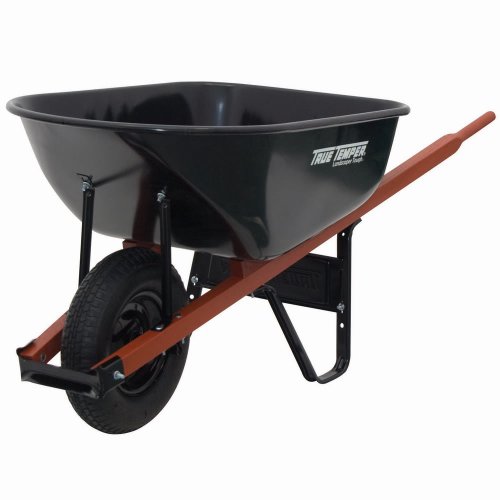
This guide is for homeowners pouring a patio, footings, or a walkway, and for small contractors moving concrete across a job site. The two wheelbarrows below were picked from their names and specifications on Amazon product pages, and both are steel contractor models with 6-cubic-foot trays, so the comparison turns on tires, handles, and bracing rather than on capacity alone.
Quick Picks
As an Amazon Associate we earn from qualifying purchases.
| Product | Best for | Key spec from title |
|---|---|---|
| Jackson M6T22 Steel Contractor Wheelbarrow | Rough ground and full concrete loads | 6-cubic-foot steel tray with leg stabilizers |
| Ames True Temper C6 Steel Tray Contractor Wheelbarrow | Everyday concrete hauling with a proven tray | 6-cubic-foot steel tray contractor design |
How to Choose
Tray material and capacity
Steel is the right tray material for concrete, because it resists the abrasion of aggregate and holds its shape under a dense load. Poly trays are lighter and will not rust, yet they flex and can crack when a full batch of concrete sits in them. Capacity matters just as much: a 6-cubic-foot tray is the contractor standard, and it moves a useful amount per trip without becoming impossible to tip. A deeper tray also keeps a wet mix from sloshing over the sides on the way to the pour, which matters on sloped ground. Check whether the tray is seamless, since a folded seam is a weak point where wet concrete can catch and harden.
Tire type and ground conditions
A pneumatic tire rolls more smoothly over rough ground and absorbs the shock of a heavy load, which makes it the better choice for uneven yards and job sites. Its weakness is punctures, and a flat tire under a load of concrete is a miserable repair. Flat-free tires never need air and suit sites full of nails, rebar offcuts, and sharp stone, though they ride firmer and transmit more vibration to the handles. Check the axle and bearings as well, since a loaded barrow puts its full weight through one wheel and a worn bearing makes steering heavy. Match the tire to the ground you will cross most often, not to the tire that looks toughest in a photograph.
Handles, balance, and bracing
Wooden handles absorb vibration and stay comfortable through a long pour, while steel handles are stronger and need less care in wet weather. Either way, the handles should be full length, because short handles force the user to lift with the back instead of the legs. Grip diameter matters on a long pour too: handles that are too thick tire the hands, while handles that are too thin dig in under a full load. Look underneath the tray as well: front tray braces, a steel undercarriage, and leg stabilizers keep the barrow steady when it is parked with a load and stop the tray flexing when it is tipped. A barrow that feels tippy empty will feel worse loaded.
Dumping, cleaning, and storage
Concrete work ends with cleaning, and a tray that rinses easily saves real time. A sloped, curved front pours cleanly and lets the last of the mix slide out, while a tray with deep corners traps material that hardens into a crust. Rinse the tray with water as soon as the pour is done, before the residue sets, and store the barrow under cover with the tray facing down or tilted so rainwater drains away. A light coat of oil on a clean tray before the pour also helps the mix release, though it is no substitute for rinsing afterwards. A steel tray that is left wet will rust at the seams first, so drying matters as much as washing.
The 2 Best Options
Jackson M6T22 Steel Contractor Wheelbarrow
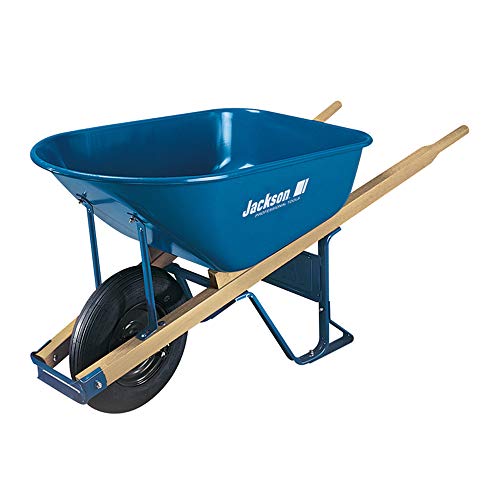
The Jackson M6T22 is the contractor benchmark for concrete hauling, built around a 6-cubic-foot seamless steel tray with heavy-duty bracing underneath. Its 16-inch pneumatic tire rolls over ruts, gravel, and lawn without bogging down, and the hardwood handles give a comfortable grip through a full pour. Patented leg stabilizers hold the barrow steady when it is parked loaded, which matters when the mixer is still turning and the barrow has to wait its turn at the pour. For a crew that pours often, that combination of a deep steel tray, a cushioned tire, and steady legs is what keeps the work moving without a second barrow standing by.
Specs
- 6-cubic-foot seamless steel tray
- 16-inch pneumatic tire
- Full-size hardwood handles
- Steel undercarriage with front tray braces
- Patented leg stabilizers
- Single-wheel contractor design
Best for: Contractors and homeowners moving full concrete loads across rough or uneven ground.
Watch out for: Check the tire pressure before each pour, since a soft pneumatic tire under a concrete load makes the barrow hard to steer and harder to tip.
Ames True Temper C6 Steel Tray Contractor Wheelbarrow
The Ames True Temper C6 is a straightforward contractor wheelbarrow built on the same 6-cubic-foot steel tray formula that job sites have relied on for years. Its steel tray handles concrete, gravel, and stone without the flex that lighter trays show under a dense load, and the contractor frame is sized for the same full loads as the Jackson. It is the simpler of the two picks in this guide: no extra features to learn, just a deep steel tray on a proven single-wheel frame. After the concrete work is done, the same tray carries soil, gravel, and firewood as well, so the barrow earns its storage space year round.
Specs
- 6-cubic-foot steel tray
- Steel tray contractor wheelbarrow
- Contractor-grade frame
- Single-wheel design
Best for: Homeowners and small crews who want a proven steel-tray barrow for regular concrete work.
Watch out for: Confirm the handle and tire configuration on the listing before ordering, since this model is sold in several handle and tire variants under similar names.
Which One Fits Your Situation
A homeowner pouring a patio or footings
Pick the Ames True Temper C6. Its steel tray carries a full batch of concrete without flexing, and the straightforward contractor frame does the job without features a weekend pour will not use. It suits a homeowner who needs a reliable barrow for a defined project and for garden work afterwards, rather than a daily job-site tool, and the barrow stays useful for garden work long after the concrete has cured.
A contractor moving concrete across rough ground
Pick the Jackson M6T22. The 16-inch pneumatic tire handles ruts and gravel better than a firm flat-free tire, the leg stabilizers keep a loaded barrow steady while the pour is set up, and the braced steel undercarriage takes the repeated stress of full loads. It is built for the pace of a working site, where the barrow is loaded, parked, and tipped many times a day, and the deep tray means fewer trips back to the mixer.
Someone who wants the steadiest parked barrow
Pick the Jackson M6T22. Its patented leg stabilizers are the difference here, holding the tray level when the barrow is parked with a load instead of letting it rock on its legs. That stability matters most when concrete has to wait in the tray while forms are checked or a second batch is mixed.
Tight gates and narrow paths
Pick either model, since both are single-wheel barrows that steer through a standard garden gate and along a narrow path between forms. The single wheel lets the user tilt and turn in a tight space where a two-wheel cart would jam, and the 6-cubic-foot tray still moves a full load per trip, with the load staying balanced over the single wheel on a gentle slope. Choose the Jackson for rough ground or the Ames for a simpler everyday barrow.
Common Mistakes
- Choosing a poly tray for concrete work, when a steel tray is the one that resists aggregate abrasion and holds its shape under a dense load.
- Filling the tray to the brim on the first trip, which makes the barrow hard to balance and harder to tip cleanly.
- Ignoring tire pressure on a pneumatic model, then fighting a soft tire under a full load of concrete.
- Leaving wet concrete residue in the tray, where it hardens into a crust that steals capacity and throws off the balance.
- Storing a steel barrow outside with the tray facing up, so rainwater pools, rust starts at the seams, and the handles weather faster.
Frequently Asked Questions
What size wheelbarrow is best for concrete?
A 6-cubic-foot steel tray is the contractor standard for concrete, and both models in this guide use it. The size moves a useful amount per trip without becoming too heavy to tip, and a steel tray holds its shape under the dense load. Smaller trays mean more trips, while larger trays are hard to balance when full, so the 6-cubic-foot size suits most patios, footings, and walkway pours.
Is a steel or poly tray better for concrete?
Steel is better for concrete. It resists the abrasion of sand and aggregate, holds its shape under a heavy load, and pours cleanly from a sloped front. Poly trays are lighter and will not rust, but they flex under dense loads and can crack when a full batch of concrete sits in them. For regular concrete work, a seamless steel tray is the safer long-term choice.
Should I choose a pneumatic or flat-free tire?
Choose a pneumatic tire for rough or uneven ground, since it rolls more smoothly and absorbs shock under a heavy load. Choose a flat-free tire for sites with nails, rebar offcuts, or sharp stone, where a puncture would stop the pour. Pneumatic tires need pressure checks before work, while flat-free tires need no air but ride firmer and pass more vibration to the handles.
How do I clean a wheelbarrow after pouring concrete?
Rinse the tray with water as soon as the pour is finished, before the residue begins to set. Use a stiff brush on the seams and corners where mix collects, and tip the barrow so the rinse water drains fully. Never wash concrete slurry into a storm drain. Once clean, store the barrow under cover with the tray tilted so rainwater runs off instead of pooling.