Our Short List of 3

- Best for: adult beginners who want one takedown bow that can move up in draw weight over time.
- Bow length: 62 inches
- Draw weights: 25 to 60 pounds
- Riser: olive Dymondwood and hard maple laminate
- Limbs: hard maple with black fiberglass

- Best for: taller archers and longer draws who want a choice of bow length in a traditional takedown.
- Bow length: 62 inches standard or 64 inches XL
- Draw weights: 20 to 60 pounds on the 62-inch model
- Riser: four-wood laminate construction
- Limbs: hard maple core with fiberglass lamination
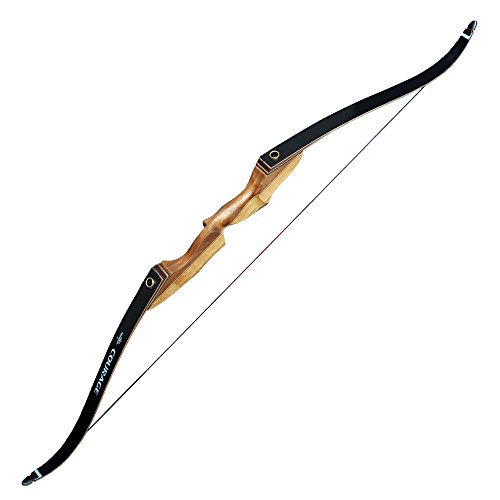
- Best for: archers who want a compact 60-inch takedown at hunting draw weights.
- Bow length: 60 inches
- Draw weights: 35 to 60 pounds in 5-pound steps
- Riser: laminated Bintangor, Makore and Chuglam hardwoods
- Limbs: laminated maple and Makore with fiberglass face
All 4 Picks at a Glance
| Product | Specs | Action |
|---|---|---|
| Samick Sage Takedown Recurve Bow |
| Check price on Amazon |
| Southwest Archery Spyder Takedown Recurve Bow |
| Check price on Amazon |
| SAS Courage Takedown Recurve Bow |
| Check price on Amazon |
 CVLIFE 62in Wooden Takedown Recurve Bow Set |
| Check price on Amazon |
Key takeaways
- Compare four traditional recurve bows, from the Samick Sage to the SAS Courage, with draw weights, bow lengths and tips for choosing the right setup.
Buying a traditional recurve is mostly a decision about fit: the draw weight you can hold steady with clean form today, and a bow length that suits your draw without stacking or feeling twitchy. Pick too heavy and your release falls apart within a dozen arrows; pick well and the same bow can carry you from backyard targets to the woods.
This roundup is for adult beginners buying a first bow, target shooters moving toward bowhunting weights, and taller archers who need a longer option. Every pick below was chosen from the names and specifications on its Amazon listing, and each one is a wood-laminate recurve in the classic takedown format. The weights, lengths, and included parts quoted later in this guide come straight from those listings, so the comparison stays on what each seller actually ships rather than on catalog claims.
Quick Picks
As an Amazon Associate we earn from qualifying purchases.
| Product | Best for | Key spec from title |
|---|---|---|
| Samick Sage Takedown Recurve Bow | First bow you can grow with | 62 in, 25 to 60 lb draw weights |
| Southwest Archery Spyder | Two lengths for taller archers | 62 or 64 in, 20 to 60 lb draw weights |
| SAS Courage | Hunting-weight takedown | 60 in, 35 to 60 lb draw weights |
| CVLIFE 62in Wooden Takedown Recurve Bow Set | Complete starter set | 62 in, 30 to 40 lb, arrows included |
How to Choose
Match Draw Weight to Your Form and Purpose
Draw weight is measured at a 28-inch draw, and it decides how long you can shoot before fatigue ruins your anchor and release. Most adult beginners shoot their best work between 25 and 35 pounds, where form can be learned without fighting the bow. Hunting is a different calculation: many regions set a minimum draw weight for deer, and heavier limbs also demand stronger shoulders. A takedown bow softens this choice, because you can begin on light limbs and bolt on heavier ones later instead of replacing the whole bow.
Pick a Bow Length That Fits Your Draw
Bow length is measured along the curve of the limbs and is listed as the AMO length. A 62-inch bow suits most adults drawing up to about 28 or 29 inches, while a 60-inch bow feels handier in brush and in a stand but starts to stack sooner as the draw gets longer. Taller archers and anyone drawing past 29 inches should look at a 64-inch option, which keeps the string angle comfortable at full draw. Shorter bows are not better or worse; they simply trade smoothness at long draws for maneuverability.
Decide Between Takedown and One-Piece
A takedown recurve separates into a riser and two limbs, which makes it easier to store, travel with, and upgrade. Swapping limbs is how most archers move up in draw weight, and it also means a damaged limb can be replaced on its own. A one-piece bow has no bolts to check and a clean, traditional feel, but the draw weight you buy is the draw weight you keep. All four bows in this roundup are takedowns, so each one can change limbs as your strength and goals change.
Check Riser, Limbs and Bushing Threads
Most traditional recurves in this class pair a laminated hardwood riser with limbs built from a maple core faced in fiberglass. That construction is forgiving, durable, and consistent from shot to shot. What separates one listing from another is often the hardware: brass bushings in the riser let you add a plunger, stabilizer, sight, or quiver later, while a riser without them keeps you shooting off the shelf. Also confirm which string the bow is built for, because some limbs are limited to Dacron strings and are not made for modern low-stretch string materials.
The 4 Best Options
Samick Sage Takedown Recurve Bow
- Best for: adult beginners who want one takedown bow that can move up in draw weight over time.
- Bow length: 62 inches
- Draw weights: 25 to 60 pounds
- Riser: olive Dymondwood and hard maple laminate
- Limbs: hard maple with black fiberglass
adult beginners who want one takedown bow that can move up in draw weight over time.
the listing groups every draw weight and hand option together, so confirm the exact weight and hand you selected before ordering.
The Sage is the bow most traditional archers start on, and the listing shows why: a 62-inch takedown frame with draw weights running from 25 to 60 pounds, so the same riser covers a first season of target practice and, with heavier limbs, hunting weight later. The riser is cut past center and fitted with brass bushings, which leaves room for a plunger, stabilizer, sight, or quiver as your shooting develops. For a beginner who wants one bow that will not need replacing after a few months, this is the safest shape of purchase in the group.
Southwest Archery Spyder Takedown Recurve Bow
- Best for: taller archers and longer draws who want a choice of bow length in a traditional takedown.
- Bow length: 62 inches standard or 64 inches XL
- Draw weights: 20 to 60 pounds on the 62-inch model
- Riser: four-wood laminate construction
- Limbs: hard maple core with fiberglass lamination
taller archers and longer draws who want a choice of bow length in a traditional takedown.
the draw weight ladder differs between the two lengths, so check the range listed for the size you are buying.
The Spyder follows the same proven layout as the Sage but adds a choice most bows in this class skip: a 62-inch standard model and a 64-inch XL, which gives taller archers and longer draws a frame that stays smooth past 29 inches. Draw weights on the standard bow run from 20 to 60 pounds in fine steps, starting light enough for a cautious first purchase. The four-wood riser and rounded limb pockets make it a comfortable bow for long practice sessions, and the package includes the stringer tool you need for safe assembly.
SAS Courage Takedown Recurve Bow
- Best for: archers who want a compact 60-inch takedown at hunting draw weights.
- Bow length: 60 inches
- Draw weights: 35 to 60 pounds in 5-pound steps
- Riser: laminated Bintangor, Makore and Chuglam hardwoods
- Limbs: laminated maple and Makore with fiberglass face
archers who want a compact 60-inch takedown at hunting draw weights.
this ASIN is the 45-pound right-hand configuration, and accessory bushings vary by production run, so check the listing details for the variant you choose.
The Courage is the hunting-leaning pick here: a shorter 60-inch takedown that is easier to carry through brush and manage in a stand, with draw weights from 35 to 60 pounds in five-pound steps. The riser blends three hardwoods, Bintangor, Makore, and Chuglam, and the limbs are laminated maple and Makore faced with fiberglass for a stiff, durable build. It is a plainer package than the starter set below, with a string and a rug rest in the box, which suits an archer who already owns arrows and accessories and simply wants a solid hunting frame.
CVLIFE 62in Wooden Takedown Recurve Bow Set
- Best for: new shooters who want a complete, ready-to-practice set in one box.
- Bow length: 62 inches
- Draw weights: 30 to 40 pounds
- Draw length: 28 inches
- Materials: fiberglass and wood, maple and fiberglass laminated limbs
new shooters who want a complete, ready-to-practice set in one box.
it is a right-hand-only listing and the draw weights top out at 40 pounds, so confirm both points against your plans before buying.
This CVLIFE set removes the guesswork for a brand-new shooter by boxing the bow with the gear a first month of practice actually requires: six arrows, a quiver, an arm guard, a finger guard, a bowstringer, a string silencer, and an arrow rest. The bow itself is a 62-inch three-piece takedown with fiberglass and wood limbs and draw weights from 30 to 40 pounds, a range aimed at target practice and form work rather than heavy hunting setups. At about 2.1 pounds it is also the lightest carry in this roundup for long walks to the range.
Which One Fits Your Situation
Your First Traditional Bow as an Adult
Start with the Samick Sage at a modest draw weight. Its 25-to-60-pound ladder and brass bushings mean the bow you learn form on is the same bow you can hunt with later after a limb swap. Order lighter than your instinct suggests, because clean form learned at 30 pounds transfers upward, while habits built fighting a heavy bow are hard to undo.
Moving From Target Practice Toward Bowhunting
The SAS Courage fits this step. The 60-inch frame is easier to handle in a stand or in thick cover, and the 35-to-60-pound range covers the weights most hunters settle on. Because the box holds little beyond the bow, string, and rest, it suits someone who already owns arrows, a tab, and an arm guard from target shooting.
A Taller Archer With a Longer Draw
Choose the Southwest Archery Spyder in its 64-inch XL form. The extra length keeps the draw smooth for archers pulling past 29 inches, where a 60- or 62-inch bow starts to stack and pinch the string fingers. The standard 62-inch version still covers draws up to about 29 inches if you prefer the more common size.
Buying a Complete Set for a New Shooter
The CVLIFE set is the simple answer when nothing is owned yet. Bow, arrows, quiver, guards, stringer, silencer, and rest all arrive together, so the first session can happen the same week. Keep expectations aligned with its 30-to-40-pound range: it is a practice and form bow first, and a stepping stone to a heavier hunting setup later.
Common Mistakes
- Buying the heaviest draw weight you can pull once, instead of the weight you can hold steady for fifty arrows with clean form.
- Ignoring bow length and ordering a 60-inch bow for a long draw, then blaming the stacking and finger pinch on your release.
- Stringing a takedown bow by the step-through method instead of using a stringer, which can twist a limb.
- Forgetting that hand orientation is about eye dominance, and ordering the hand that feels natural rather than the one that matches your dominant eye.
- Treating the arrows in a starter set as matched hunting arrows, instead of checking spine against your actual draw weight and draw length.
Frequently Asked Questions
What draw weight should a beginner start with?
Most adult beginners shoot best between 25 and 35 pounds, measured at a 28-inch draw. That range lets you build a repeatable anchor and a clean release without fatigue taking over the session. On a takedown bow you can move to heavier limbs later, so there is little reason to start heavy and learn poor habits.
Can you hunt deer with a 40-pound recurve bow?
In many places, yes, provided the draw weight meets your local minimum for deer and the arrows and broadheads are matched to the bow. Plenty of hunters work in the 40-to-50-pound band with traditional gear. Check your current regulations before the season, because minimum weights and arrow requirements differ by state and by species.
Do these bows come strung and ready to shoot?
No. Takedown recurves ship unstrung with the limbs detached or ready to bolt on, and stringing is part of normal use. The Spyder and CVLIFE listings include a stringer tool, which is the safe way to string and unstring the bow. Plan a few minutes for assembly and a brace height check before your first session.
How long a recurve bow do I need for a 29-inch draw?
Look at 62 inches as the minimum and 64 inches as the comfortable choice. A 60-inch bow will usually feel stacked and tight at that draw length, while the 64-inch Spyder XL keeps the string angle relaxed. If you are between sizes, the longer bow is the forgiving pick for form work and longer practice sessions.