Our Short List of 3

- Best for: Riders who want MIPS and a major brand behind the shell.
- Polycarbonate shell
- MIPS energy management system
- Adjustable visor
- Velocity Flow ventilation

- Best for: Riders who want DOT and ECE labels on the same helmet.
- ABS shell
- MIPS low-friction layer
- Meets DOT FMVSS 218 and ECE 22.06
- Visor designed to release in a crash

- Best for: Riders who put low weight and easy cleaning first.
- ABS shell with integrated spoiler
- Multi-density EPS liner
- Wind-tunnel-developed vent ports
- Removable, washable and replaceable interior
All 4 Picks at a Glance
| Product | Specs | Action |
|---|---|---|
| Bell MX-9 MIPS Dirt Helmet |
| Check price on Amazon |
| Fox Racing V1 Motocross Helmet |
| Check price on Amazon |
| GLX GX23 Dirt Bike Helmet |
| Check price on Amazon |
 ILM 128S Dirt Bike Helmet |
| Check price on Amazon |
Key takeaways
- Compare four off-road motorcycle helmets on DOT and ECE labels, MIPS layers, venting and listed weight, with sizing checks to make before you order.
The real decision with a dirt helmet is not the graphics. It is whether the shell carries a current safety label, whether the liner adds a low-friction layer for angled hits, and whether the shape matches your head well enough to stay put when a rut grabs the front wheel. Two helmets can share a DOT sticker and still differ a lot in venting, weight and how the goggle port is cut, so the label is the starting point, not the answer.
This roundup is for trail riders, motocross beginners and ATV riders who want a proper peaked off-road helmet rather than a street lid. Each pick below was chosen from its Amazon listing name and printed specifications: the certification named on the page, the shell and liner materials, the vent layout and the listed weight. Where a listing left a detail unstated, that detail is simply left out instead of guessed.
Quick Picks
As an Amazon Associate we earn from qualifying purchases
| Product | Best for | Key spec from title |
|---|---|---|
| Bell MX-9 MIPS | Riders who want a known brand with a rotational layer | MIPS system, DOT label |
| Fox Racing V1 | Riders who want DOT and ECE on one shell | ECE 22.06 and MIPS |
| GLX GX23 | Lighter heads and smaller budgets | 3.15 lb listed weight |
| ILM 128S | First-time dirt riders keeping it simple | ABS shell, vented EPS liner |
How to Choose
Read the Certification Line First
Every helmet here carries the DOT label tied to FMVSS 218, which is the baseline for riding on American soil. Some listings add ECE 22.06, the current European standard, and that second label means the design also went through a separate approval route with its own impact and retention checks. A third line worth scanning for is MIPS or a similar low-friction layer, which is built to reduce rotational movement in angled impacts. None of these lines replaces fit, but a helmet missing the basic DOT line should not make your shortlist at all.
Match the Shell Shape to Your Head
Dirt helmets are worn for hours, often in heat, so a shape mismatch shows up as a forehead hot spot long before the ride ends. Measure around your head just above the eyebrows and compare that number with the size chart on the listing, not with the size you wear in a street helmet, because brands cut their shells differently. A correct fit feels evenly snug all the way around, with no single pressure point and no rocking when you shake your head. Cheek pads that feel almost too tight on day one usually settle after a few rides.
Check the Goggle Port and Peak
An off-road helmet works as a system with goggles, so the eye port has to be wide enough for your goggle frame to sit flat against your face with the strap running cleanly over the shell. Listings that name a large eye port or goggle fitment are telling you that pairing was considered at the design stage. The peak matters too: an adjustable peak lets you drop it against low sun and roost, while a breakaway peak is designed to release in a crash instead of catching the ground and twisting the helmet.
Weigh Venting Against Weight
Slow technical trails generate more heat than fast open ones, and a helmet with real intake and exhaust channels will feel very different by the second hour. Look for named vent systems and exhaust ports in the listing rather than a vague promise of airflow. Then check the listed weight, because a few hundred grams on your head becomes neck fatigue on rough ground. A removable, washable liner is the third leg of this decision: dirt riding fills a liner with dust and sweat, and being able to pull it out and wash it keeps the helmet usable season after season.
The 4 Best Options
Bell MX-9 MIPS Dirt Helmet
- Best for: Riders who want MIPS and a major brand behind the shell.
- Polycarbonate shell
- MIPS energy management system
- Adjustable visor
- Velocity Flow ventilation
Riders who want MIPS and a major brand behind the shell.
The listing gives no weight figure, so compare sizes carefully if a light helmet is your priority.
Bell built the MX-9 for riders who want a recognised off-road name without stepping into flagship money. The listing describes a tough polycarbonate shell over a MIPS energy management system, with an adjustable visor, Velocity Flow ventilation and a removable liner you can pull out and hose down after a muddy day. That mix suits trail and track riders who crash occasionally, ride in mixed weather and want the rotational layer that plainer helmets in this group leave out, while keeping spares and sizing support easy through a major brand.
Fox Racing V1 Motocross Helmet
- Best for: Riders who want DOT and ECE labels on the same helmet.
- ABS shell
- MIPS low-friction layer
- Meets DOT FMVSS 218 and ECE 22.06
- Visor designed to release in a crash
Riders who want DOT and ECE labels on the same helmet.
Fox sizing runs on its own chart, so measure and check the listing chart instead of reusing your street helmet size.
The V1 is the pick for riders who read certification lines closely. Its listing pairs DOT FMVSS 218 with ECE 22.06, adds a MIPS low-friction layer inside an ABS shell, and uses a visor designed to release in a crash rather than dig in. Fox also sells the V1 across youth and adult sizes running from YS to XXL, which makes it one of the easier helmets here for smaller or larger heads to fit properly. If your riding mixes track days with trail work and you want the fullest paperwork of the group, this is the natural first look.
GLX GX23 Dirt Bike Helmet
- Best for: Riders who put low weight and easy cleaning first.
- ABS shell with integrated spoiler
- Multi-density EPS liner
- Wind-tunnel-developed vent ports
- Removable, washable and replaceable interior
Riders who put low weight and easy cleaning first.
The GX23 is sold in matte black only, and the listing names DOT without an ECE line.
GLX is a Southern California brand, and the GX23 is its dedicated dirt helmet rather than a street shell with a peak added. The listing describes an ABS shell with an integrated spoiler, a multi-density EPS liner and vent ports shaped in the brand’s wind tunnel work, plus an interior that is removable, washable and replaceable. At a listed 3.15 pounds in the large size it is the lightest helmet in this roundup, which makes it a sensible pick for smaller riders, younger riders moving up to adult sizes and anyone whose neck gives out before the trail does.
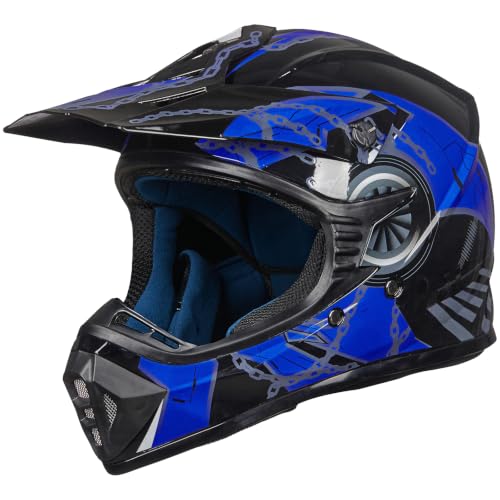
ILM 128S Dirt Bike Helmet
- Best for: New dirt riders who want a simple, washable first helmet.
- ABS shell
- High-density, fully vented EPS liner
- Front and back vents
- Detachable, washable inner pads
New dirt riders who want a simple, washable first helmet.
At 4.04 pounds listed it is the heaviest pick here, and the listing names DOT only.
The 128S is the straightforward entry point of the group: an ABS shell, a high-density vented EPS liner and front and back vents, with detachable inner pads you can wash between rides. The listing states that it meets or exceeds FMVSS-218 and DOT safety standards, and the Amazon search pages for this model show steady buying month after month, which usually means sizing stock is easy to find. It skips the rotational layers and second certifications of the Bell and Fox, so it fits riders starting out on trails, quads and play bikes who want the basics done properly.
Which One Fits Your Situation
You Ride Slow Trails in Summer Heat
Heat builds fastest at walking pace, so vent layout matters more than anything else here. The Bell MX-9 and its Velocity Flow system, and the GLX GX23 with its wind-tunnel-shaped ports, are the two to compare first. Both also let you remove the liner for washing, which matters once dust and sweat start sharing the padding.
You Want the Strongest Safety Paperwork
Start with the Fox Racing V1, the only helmet in this group whose listing names both DOT FMVSS 218 and ECE 22.06 alongside a MIPS layer. The Bell MX-9 is the next stop, pairing DOT with MIPS in a polycarbonate shell. The GLX and ILM carry DOT alone, so they ask you to trade paperwork for weight or simplicity.
You Are Buying a First Dirt Helmet
The ILM 128S covers the fundamentals without asking you to decode extra systems: DOT label, vented liner, washable pads and a shape sold in a wide size run. Spend your attention on measuring your head and using the listing size chart, because a correct fit on a basic helmet protects better than a loose fit on a fancy one.
Your Neck Gives Out Before the Trail Does
Weight is your deciding number, and the GLX GX23 is the clear pick at a listed 3.15 pounds in large. The ILM sits at the other end of this group at 4.04 pounds. If you ride long, rough sections where your head gets worked by every rut, that gap is worth more than any graphic option on the page.
Common Mistakes
- Ordering the size you wear in a street helmet instead of measuring your head and using the listing size chart.
- Treating a DOT line as the whole decision and ignoring fit, venting and whether the goggle port matches your goggles.
- Buying a street full-face helmet for dirt use, then fighting a narrow eye port and a missing peak all season.
- Keeping a helmet in service after a hard crash because the shell still looks clean from the outside.
- Choosing on weight alone and ending up in a helmet whose shape gives you a forehead hot spot within an hour.
Frequently Asked Questions
Is DOT enough, or should I look for ECE 22.06 as well?
DOT tied to FMVSS 218 is the required baseline in the United States, and every helmet here carries it. ECE 22.06 adds a second, independent approval route, so a helmet listing both, like the Fox V1, has cleared two systems. Either label on a well-fitting helmet is a sound starting point.
How tight should a new off-road helmet feel?
Evenly snug, with firm cheek pad pressure and no single sore point. The helmet should not rock when you shake your head, and the skin on your forehead should move with the liner when you push the shell. Pads relax slightly with use, so almost too tight is usually closer to correct than comfortable and loose.
Can I ride dirt in a street full-face helmet?
You can, but the fit for the job is poor. Street shells have narrow eye ports that pinch goggle frames, no peak for sun and roost, and venting tuned for steady road speed rather than slow climbs. A peaked off-road helmet like the four here is shaped around goggles and low-speed airflow from the start.
When should a dirt helmet be replaced?
After any crash that puts real force through the shell, even if the outside looks undamaged, because the liner crushes once and does not recover. Age is the other trigger: materials dry out over years of heat and sweat, so a helmet that has seen several hard seasons deserves replacement on condition alone.