Key takeaways
- Compare the best laboratory incubators for product development: PID benchtop models, a shaking incubator and a portable heating-and-cooling unit for R&D.
Choosing a laboratory incubator for product development comes down to matching the chamber to the work. Bacterial cultures, seed germination, media warming and formulation samples each need a steady temperature held for hours or days, and a unit that drifts a few degrees can spoil a whole run. The real decision is not which incubator looks most capable on paper, but which one holds the temperature your protocol needs, fits the vessels you actually use, and keeps working day after day on a busy bench.
This guide is for small research and development teams, university teaching labs, startup formulation benches and independent developers setting up a first lab corner. The four picks below were chosen from the names and specifications on their Amazon product pages: two VEVOR PID benchtop units in different sizes, a NEWTRY shaking incubator for liquid cultures, and a portable IVYX unit that both heats and cools.
Quick Picks
As an Amazon Associate we earn from qualifying purchases.
| Product | Best for | Key spec from title |
|---|---|---|
| VEVOR Lab Incubator 20L | Everyday bacterial culture and seed germination | 20L, RT+5-65°C PID temperature control |
| VEVOR Lab Incubator 6L | A cramped bench or a first small unit | 6L, PID temperature control RT+5-65°C |
| NEWTRY Lab Incubator Shaker | Liquid cultures that need constant agitation | 50-300rpm shaking, 5-60°C |
| IVYX Scientific 5L Incubator | Field work and below-ambient holding | 5L, heating and cooling 0°C to +55°C |
How to Choose
Match the temperature range to the work
Most product development work sits between room temperature and 65°C: bacterial culture at 37°C, yeast work in the low 30s, seed germination in the mid 20s, and media warming just above room temperature. A heating-only incubator covers all of that, but it cannot hold anything below the temperature of the room it sits in. If a protocol calls for holding reagents, enzymes or samples at 4°C, or for running a cold step, only a unit with active cooling will do. Check the stated range on the listing, then check the lower end twice, because the gap between heating-only and heating-and-cooling is the most common reason buyers end up ordering a second unit.
Size the chamber for the vessels, not the bench
Capacity in litres tells only part of the story. A 20-litre chamber sounds generous until the flasks, petri dishes and racks go in, and a 6-litre chamber holds a handful of small vessels at most. Measure the tallest vessel, then compare it with the interior height and the shelf spacing, since adjustable shelves only help when the shelf brackets move far enough. A transparent window helps here, because checking cultures through glass avoids opening the door and dropping the temperature. For a shared bench, a mid-size 20-litre unit usually holds one full run, while a small unit suits single-vessel work or a second chamber dedicated to one temperature.
Pick the control type your protocol needs
Digital PID control holds a set temperature far more steadily than a simple dial thermostat, and it matters most for long runs where drift compounds over days. A shaking incubator adds a moving platform, which keeps liquid cultures aerated and mixed, but it is the wrong tool for petri dishes, static cultures or anything that must sit still. Heating-and-cooling units use a thermoelectric system instead of a heating element alone, so they can hold below ambient temperature, though they usually top out near 55°C. Decide first whether the work is static or shaken, and whether it ever needs cold, then choose the control type that matches.
Check power, placement and heat safety
These are mains-powered heating appliances, so the practical details matter. The models in this guide run on a standard 110V supply, which suits a US bench, and the larger units draw several hundred watts, so give each one its own wall outlet rather than sharing a power strip with other heaters. Leave clearance around the cabinet so air can move and heat can escape, keep flammable material away from the vents, and unplug the unit before cleaning the chamber. A stainless steel interior wipes down easily between runs, which matters when one chamber serves several projects in a week.
The 4 Best Options
VEVOR Lab Incubator 20L

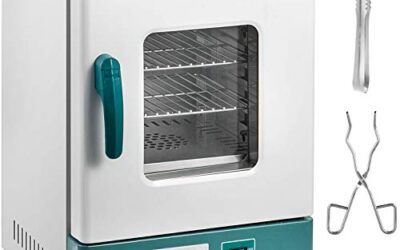
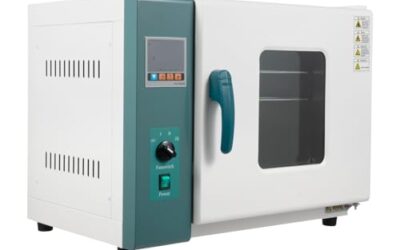
The 20-litre VEVOR is the workhorse of this group, and it suits a small lab that runs bacterial culture, seed germination and media warming through the same chamber. Its PID controller and hot air circulation hold the set temperature across a useful range, while the adjustable shelf brackets let the chamber fit tall flasks on one shelf and stacked dishes on another. The transparent window makes it easy to check a run without opening the door, and the steel cabinet with a stainless inner chamber stands up to daily use and regular cleaning between projects.
Specs
- 20L capacity with a 304 stainless steel inner chamber
- Temperature range RT+5-65°C with intelligent PID control
- Hot air circulation system for even heating
- 400W power supply, 110V
- Adjustable shelf brackets and a transparent viewing window
- Double silicone sealing strips on the door
- Outside dimensions 23 x 17 x 16 inches, 40.9 pounds
- Model AF001
Best for: A small lab that needs one chamber for bacterial culture, seed germination and media warming.
Watch out for: Heating only, so it cannot hold samples below room temperature, and at 40.9 pounds it needs a firm bench and a second pair of hands to move.
VEVOR Lab Incubator 6L
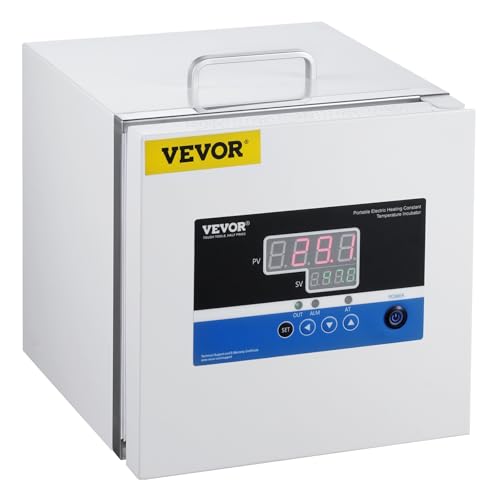
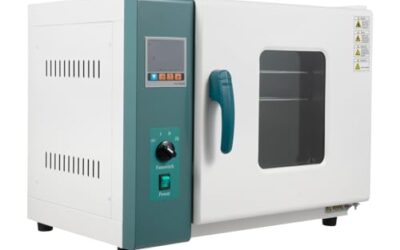
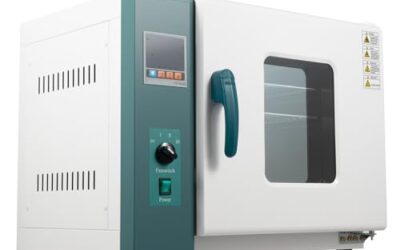
The 6-litre VEVOR is the same idea in a much smaller box, and it fits a crowded bench, a teaching station or a first lab setup where space is tight. It carries the same PID control and the same RT+5-65°C range as its larger sibling, so the temperature behaviour is familiar, while the compact cabinet leaves room on the bench for the rest of the workflow. It is best understood as a dedicated small chamber: one temperature, a few vessels, and a short walk from the rest of the bench, rather than the single incubator for a whole team.
Specs
- 6L capacity in a compact benchtop cabinet
- Temperature range RT+5-65°C with intelligent PID control
- Temperature stability within ±2°C
- Outside dimensions 11.93 x 10.31 x 12.01 inches, 15.65 pounds
- Model 303-00A
- Manufacturer VEVOR
Best for: A single researcher, a teaching station or a second chamber held at one fixed temperature.
Watch out for: The 6L chamber fits only a few small vessels, and the ±2°C tolerance is looser than the control on larger PID units, so it suits forgiving work rather than tight protocols.
NEWTRY Lab Incubator Shaker

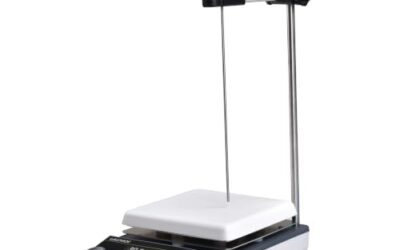
The NEWTRY is the only pick here that shakes, and that single difference decides who should buy it. Its platform moves flasks at 50 to 300rpm while the chamber holds 5 to 60°C, which keeps liquid cultures aerated and mixed through long growth runs. That combination suits microbiology and cell culture work where static incubation leaves cells starved of oxygen at the bottom of the flask. It is a specialist tool rather than a general chamber, and it earns its bench space only when the work genuinely needs motion.
Specs
- Shaking speed 50-300rpm with 20mm circumferential rotation
- Temperature range 5-60°C with temperature and time setting
- 600W heating
- Combined incubator and shaker in one cabinet
Best for: Liquid bacterial and yeast cultures that need constant agitation during growth.
Watch out for: The shaking platform suits flasks, not petri dishes or static cultures, so check the platform and flask size against the vessels already in use before ordering.
IVYX Scientific 5L Incubator

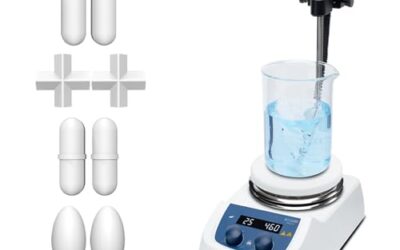
The IVYX is the smallest pick here and the only one that both heats and cools, which makes it the right choice when samples must travel or sit below room temperature. Its thermoelectric system holds 0°C to +55°C in 1°C steps and can cool about 23°C below ambient, so it covers reagent holding, yeast cultivation and temperature stress work that heating-only units cannot touch. At 9 pounds with a 12V car adapter as well as a standard 110V cord, it moves between the bench, the field and the vehicle without breaking the temperature chain.
Specs
- 5L capacity, two removable shelves forming three levels
- Temperature range 0°C to +55°C in 1°C increments
- Thermoelectric heating and cooling, cools about 23°C below ambient
- Temperature fluctuation about ±0.5°C on the same shelf
- Power 110V AC and 12V DC with a car adapter included
- Outside dimensions 8 x 11 x 12 inches, internal 6 x 6 x 10 inches
- Weight 9 pounds
Best for: Field research, sample transport and any protocol that needs holding below room temperature.
Watch out for: Temperature varies between the top and bottom shelves, there is no viewing window and no humidity control, and the 5L chamber fits small vessels only.
Which One Fits Your Situation
Running bacterial cultures or seed germination every day
Pick the VEVOR 20L. Its chamber is large enough for a full run of dishes or flasks, the PID control holds 37°C steadily, and the window lets the team check progress without opening the door. It is the one-chamber answer for a small lab that does the same kind of work most days.
Working on a crowded bench or setting up a first lab
Pick the VEVOR 6L. It takes up little bench space, runs the same temperature range as the larger VEVOR, and works well as a dedicated chamber for one project or one temperature. Its small chamber also suits a teaching station where each student group runs one set of cultures at a fixed temperature. When the workload grows, it stays useful as a second unit rather than becoming spare equipment.
Growing liquid cultures that need to keep moving
Pick the NEWTRY shaker. Static incubation starves liquid cultures of oxygen, and the shaking platform at 50 to 300rpm keeps flasks mixed through the whole run. It is the only pick in this guide built for that job, so buy it when the protocol names agitation, not as a general chamber.
Holding samples cold, or working away from the lab
Pick the IVYX 5L. Heating-and-cooling is the deciding feature: it holds reagents and samples below room temperature and keeps them at temperature during transport on the 12V adapter. That portability matters when samples must stay cold between sites, which heating-only benchtop units cannot do at all. Its small chamber is a fair trade for a unit that goes where the work goes.
Common Mistakes
- Buying a heating-only incubator when the protocol needs samples held below room temperature, then discovering the gap mid-project.
- Choosing by litres alone without measuring the tallest flask against the interior height and shelf spacing.
- Placing the cabinet hard against a wall or under a shelf so vents are blocked and heat builds up around the unit.
- Treating shaking and static incubation as interchangeable, and putting petri dishes on a shaker or flasks in a still chamber.
- Sharing one power strip between the incubator and other heaters instead of giving it its own outlet, and skipping a wipe-down of the chamber between projects.
Frequently Asked Questions
What temperature range do product development incubators need?
Most product development work needs room temperature up to about 65°C, which covers bacterial culture at 37°C, yeast work in the low 30s and seed germination in the mid 20s. A heating-only unit with PID control covers that whole band. Only work that holds reagents or samples below room temperature needs a heating-and-cooling unit, so check the cold end of the protocol before choosing.
Do I need a shaking incubator?
Only when the work grows liquid cultures that need agitation. Shaking keeps flasks aerated and mixed, which matters for bacterial and yeast growth in liquid media. Static cultures, petri dishes, seed germination and media warming do not need motion, and a shaking platform is the wrong surface for them. Buy the shaker when the protocol names agitation.
Can a laboratory incubator cool samples?
Most benchtop lab incubators only heat, so they cannot hold anything below the temperature of the room. A thermoelectric unit such as the IVYX 5L in this guide both heats and cools, holding 0°C to +55°C and dropping about 23°C below ambient. If a protocol includes a cold step, choose a heating-and-cooling model from the start.
How much capacity do I need for a small research bench?
A 20-litre chamber suits one full run of dishes or flasks for a small team, while a 5 or 6-litre unit suits a single researcher, a teaching station or a second chamber held at one temperature. Measure the tallest vessel first, then check it against the interior height, since shelf spacing decides what actually fits.