Key takeaways
- Compare five laboratory drying ovens for product development work, with chamber sizes, temperature ranges and control types checked against each listing.
A drying oven looks simple on a spec sheet, but for product development work the wrong choice shows up fast: a chamber too small for your prototype parts, a controller that overshoots on heat-sensitive polymers, or a 220V-only unit arriving at a bench wired for standard US outlets. The real decision is matching chamber volume, temperature ceiling and control precision to the samples you actually dry, cure and age during development cycles.
This roundup is for R&D technicians drying material samples, engineers curing coatings and adhesives on prototype parts, and small labs that need one dependable oven for glassware and moisture-content work. Every pick below is a forced-air or gravity laboratory drying oven sold on Amazon US, chosen from its product page name and stated specifications, with sizes running from a compact benchtop chamber up to a 70-litre unit for larger batches.
Quick Picks
As an Amazon Associate we earn from qualifying purchases
| Product | Best for | Key spec from title |
|---|---|---|
| SODONAD Horizontal Electric Blast Drying Oven 45L | General development bench work | 45L/12Gal capacity, 1000W |
| Stonylab Forced Air Convection Drying Oven 30L | Mid-size benches needing fan control | 30L chamber, adjustable fan speed |
| Sidawhope Digital Forced Air Convection Drying Oven | Tall parts in a cube chamber | 14x14x14 inch chamber |
| INTBUYING Digital Forced Air Convection Drying Oven | Small samples and tight benches | 25x26x27 cm inner chamber, PID control |
| Constant Temperature Blast Drying Oven 70L | Larger batches and bigger parts | 70L capacity, 2000W |
How to Choose
Temperature range and control precision
Development work spans gentle moisture removal at low heat through to curing and aging cycles near the top of an oven’s range, so check both ends of the stated range rather than the maximum alone. A model that starts at 50°C cannot hold a delicate 40°C drying step, while PID digital control with a stated fluctuation figure, such as plus or minus 1°C, gives repeatable results across prototype iterations. Analog dials are workable for glassware but make documented, repeatable test conditions harder to defend.
Chamber capacity and shelf layout
Rated litres describe the whole chamber, not the usable footprint, so compare the internal dimensions against your largest tray, mould or prototype part before anything else. Two adjustable shelves let you split a batch across levels and keep samples separated by material or test stage. Shelf load ratings matter more than buyers expect: dense metal parts or filled sample trays can exceed a light wire shelf quickly, so match the stated per-tray load to the heaviest load you realistically plan to dry.
Air circulation and fan control
Forced-air convection moves heated air across the load, which shortens drying times and evens out temperature between shelves compared with gravity convection, where air rises naturally and corners can lag. For product development, an adjustable fan speed is genuinely useful: powders, films and lightweight parts can be disturbed by full airflow, while dense loads benefit from stronger circulation. If your samples are fine powders or loose fibres, fan control or a gravity model deserves priority over raw heating power. Listings that state a temperature fluctuation figure also let you judge uniformity claims on evidence instead of guessing from marketing language.
Electrical requirements and bench safety
Confirm the voltage on the listing matches your lab supply before ordering, because this category mixes 110V US models with dual-voltage and import units, and a mismatch means a returned oven or a new circuit. Check the wattage against the circuit you will share with other bench equipment. Also look for stated over-temperature protection and a door seal in good order; development ovens often run long, lightly supervised cycles, and those details decide whether an unattended run is sensible. A stated timer or auto-stop function also helps when development cycles routinely finish outside working hours.
The 5 Best Options
SODONAD Horizontal Electric Blast Drying Oven 45L

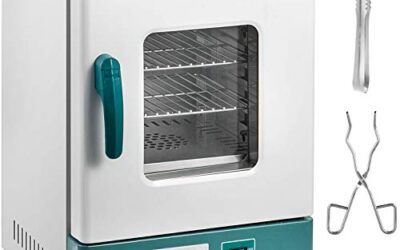
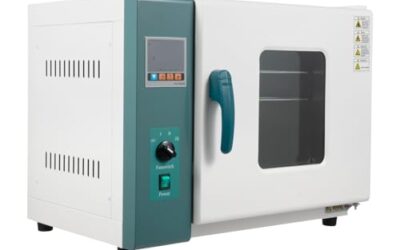
This is the straightforward centre of the roundup: a horizontal forced-air oven in the widely used 101-0AB format, sized for a development bench that dries samples, glassware and small parts every day. The two adjustable trays let you run mixed loads at two heights, and the button-operated intelligent controller suits gloved or wet hands better than a touchscreen. It fits labs that want one general-purpose oven with a high temperature ceiling for curing work, without moving up to a floor-standing unit or paying for programmable ramp features they will not use.
Specs
- Model: 101-0AB
- Capacity: 45L / 12 gallons
- Power: 1000W, 110V
- Temperature: up to 572°F (300°C), minimum 18°F above room temperature
- Trays: 2 adjustable trays, 33 lbs maximum load each
- Unit size: 46.5 x 65 x 49.5 cm
- Convection: forced air (blast) circulation
Best for: A shared development bench drying varied samples and small prototype parts daily.
Watch out for: The horizontal footprint is wide for its capacity, so measure your bench depth and door swing before ordering.
ASIN: B0DPHG2J32
Stonylab Forced Air Convection Drying Oven 30L

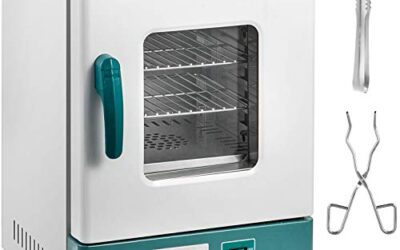
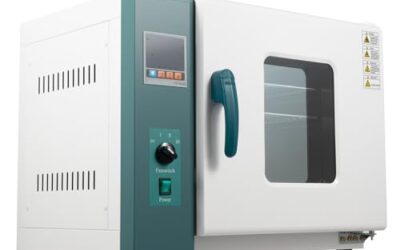
Stonylab’s 30-litre oven suits development teams whose bench space is spoken for but who still need proper forced-air drying rather than a gravity box. The listing highlights a digital display and adjustable fan speed, which is the combination you want when one oven has to handle both delicate films that dislike strong airflow and routine glassware that needs the opposite. With two shelves in a chamber this size, small-batch material testing, adhesive curing on coupons and moisture checks on granulated samples all fit comfortably without heating a half-empty large chamber.
Specs
- Capacity: 30L / 1.06 cu ft
- Temperature range: RT+10°C to 300°C
- Display: digital
- Fan: adjustable speed
- Shelves: 2
- Convection: forced air
Best for: Space-limited R&D benches that need fan control for mixed delicate and routine loads.
Watch out for: Confirm the plug and voltage variant on the listing matches your supply, as this brand sells into several markets.
ASIN: B0FN7GVPH7
Sidawhope Digital Forced Air Convection Drying Oven

The Sidawhope oven is built around a cube-shaped chamber, 14 inches in each direction, and that geometry is its argument: tall jars, upright moulds and stacked parts that waste the corners of a wide, shallow oven use this space better. The listing states a range running from room temperature to 300°C with an adjustable fan, so it covers both gentle drying and hotter curing steps. It suits product developers working with three-dimensional parts, resin prints or assembled samples rather than flat trays of material, where chamber height is the dimension that runs out first.
Specs
- Chamber: 14 x 14 x 14 inches
- Temperature range: RT to 300°C
- Fan: adjustable speed
- Control: digital temperature control
- Convection: forced air
Best for: Drying or curing tall, three-dimensional prototype parts that need chamber height.
Watch out for: A cube chamber heats a large air volume for small loads, so expect longer heat-up on single small samples.
ASIN: B0CGMVSCFB
INTBUYING Digital Forced Air Convection Drying Oven

This compact INTBUYING unit is the small end of the roundup, with an inner chamber of 25 x 26 x 27 cm that fits a few sample dishes, small parts or a single tray at a time. Its digital PID controller is the draw at this size: development tasks such as drying reference samples or conditioning small material coupons need repeatable setpoints more than they need volume. The stated ceiling of 250°C covers most drying and low-temperature curing work. It is a sensible second oven for a bench that already owns a larger unit for bulk loads.
Specs
- Inner chamber: 25 x 26 x 27 cm
- Temperature range: 50-250°C
- Control: digital PID, intelligent temperature control
- Power supply: AC 110V, 60Hz
- Convection: forced air
Best for: Small, repeatability-focused drying tasks and benches with very limited space.
Watch out for: The 50°C minimum setpoint rules out low-temperature drying below that level, so check your gentlest protocol first.
ASIN: B0DKF82CV4
Constant Temperature Blast Drying Oven 70L
At 70 litres and 2000W, this is the step up for development groups whose batches have outgrown a 45-litre bench oven: multiple trays of parts, larger moulds or parallel sample sets for comparison testing. The listing describes PID microprocessor control and a galvanised and stainless steel build, with an inner tank of 45 x 35 x 45 cm. Its stated range starts lower than most rivals here, which helps with gentle drying of assembled prototypes. The trade-off is physical: this is a heavy, power-hungry unit that needs a dedicated spot and circuit planning.
Specs
- Capacity: 70L
- Temperature range: 20°C to 290°C
- Power: 2000W
- Voltage: 110V/220V
- Inner tank: 45 x 35 x 45 cm
- Construction: galvanised and stainless steel
- Control: PID microprocessor
Best for: Growing development labs running larger or parallel batches of parts and samples.
Watch out for: Verify which voltage configuration ships before ordering, and confirm your circuit can carry the 2000W draw alongside other equipment.
ASIN: B0GS3BBWFC
Which One Fits Your Situation
You run one shared bench for varied development work
Pick the SODONAD 45L. Its capacity, two trays and 300°C ceiling cover the widest mix of daily tasks, from glassware to cured coatings, without special planning. It is the safest single-oven answer when several people share one unit and the workload changes every week. That flexibility is worth more than a slightly larger chamber you would rarely fill completely.
Your bench is crowded but samples vary in sensitivity
Choose the Stonylab 30L. The adjustable fan lets you slow airflow for films and powders, then speed it up for glassware, and the smaller chamber heats quickly for short runs. It gives up some capacity, but for a packed bench the control matters more than the litres. For a small team sharing one oven, that versatility also prevents the scheduling clashes a fixed-fan unit causes.
You dry small reference samples and need repeatability
Take the INTBUYING compact oven. PID control in a small chamber holds a setpoint steadily for moisture-content checks and coupon conditioning, and it can live permanently on a side bench as a dedicated unit while a bigger oven handles bulk work elsewhere in the lab. Its footprint is small enough to stay set up permanently, which removes the setup friction that quietly undermines repeatability.
Your batches keep outgrowing the oven you have
Move to the 70L blast drying oven. The extra volume and 2000W heating suit parallel sample sets and larger parts, and the lower starting temperature keeps gentle work possible. Plan its position and power supply first, because it is not an oven you casually relocate. Treat it as fixed lab infrastructure, closer to a small furnace than to a benchtop appliance.
Common Mistakes
- Buying on litre rating alone and discovering the chamber is the wrong shape for your tallest part or widest tray.
- Ignoring the minimum setpoint, then finding the oven cannot hold the low temperature a heat-sensitive material requires.
- Ordering a dual-voltage or import listing without confirming which configuration and plug actually ship.
- Running long cycles on a shared circuit without adding up the wattage of everything else on it.
- Drying powders or loose fibres at full fan speed and blowing the sample around the chamber.
Frequently Asked Questions
What size drying oven does a product development lab need?
Most development benches are well served by 30 to 45 litres, which handles several trays of samples or parts without dominating the bench. Move to around 70 litres only when batches regularly fill that space, and choose a compact model near 18 litres if the oven is dedicated to small reference samples and repeatability checks.
Is forced air or gravity convection better for development work?
Forced air dries faster and holds more even temperatures across shelves, which suits mixed loads and documented test conditions. Gravity convection is gentler and can suit powders or very light samples that airflow would disturb. If you work with both, a forced-air oven with adjustable fan speed covers the widest range of development tasks in one unit.
Can a laboratory drying oven cure coatings and adhesives?
Yes, within its stated temperature range. Many benchtop lab ovens reach 250 to 300°C, which covers common curing schedules for coatings, adhesives and resins used in prototyping. Check the material’s curing specification against the oven’s maximum and its control accuracy, and confirm the part and any fixtures tolerate the same temperature before running a full cycle.
What should I check before the first run of a new oven?
Verify the voltage and plug match your supply, level the unit, and run it empty through a heat cycle to burn off manufacturing residues and confirm the display tracks the setpoint. Test the chamber with your largest tray or part inside, check the door seal closes evenly, and note the recovery time after opening the door at working temperature.