Key takeaways
- Find the best sprinklers for freshly seeded dirt: gentle oscillating and spike models with soft spray that keep seed in place while bare soil stays moist.
As an Amazon Associate we earn from qualifying purchases.
Freshly seeded dirt is the most unforgiving surface a sprinkler will ever water. Bare soil has no roots holding it together, and seed sits exposed on top of it. A hard jet of water pushes seed into piles, carves small channels through the soil, and leaves bald patches that show up weeks later. The real decision is gentleness, not throw distance. A good sprinkler for new seed produces fine droplets that fall like light rain and lets you shrink the pattern to the area you seeded, so seed stays where you spread it.
This guide is for homeowners seeding a new lawn from bare dirt, for anyone overseeding thin or bare patches, and for gardeners starting a lawn on a slope, where runoff is a constant worry. It covers the sprinkler types that suit new seed best — oscillating sprinklers, spike-mounted oscillators, and small circular spray heads — and how to judge each from its listing: coverage, droplet softness, pattern controls, and anchoring in soft ground.
How to Choose
Droplet softness and spray pattern
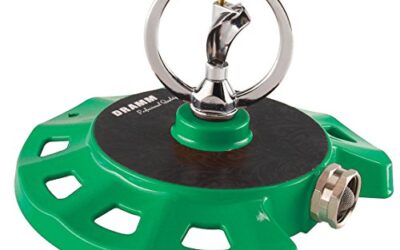
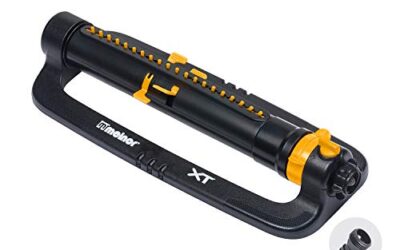
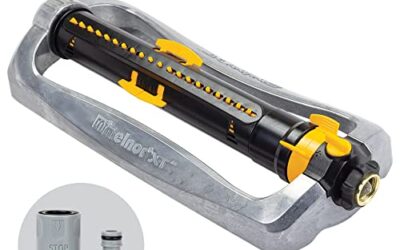
The single most important quality for new seed is how the sprinkler breaks water into droplets. Oscillating sprinklers sweep a fan of fine droplets across a rectangle, and that rain-like fall is the safest pattern for bare dirt, because no single stream hits the soil hard enough to move seed. Circular spray heads with a fine mist setting can work the same way on small patches. What you want to avoid is a heavy single jet, such as a standard impact head at full pressure, which can dig a hole in soft soil in minutes. Look for listings that describe a gentle or soft spray, or that mention newly seeded areas directly.
Coverage area and patch shape
Match the sprinkler to the size and shape of the area you seeded, not to the size of your whole yard. A rectangular bare patch suits an oscillating sprinkler, which waters a rectangle evenly and can be narrowed with range tabs or width controls. A round or irregular patch is better served by a circular spray head or a compact oscillator you can reposition. Coverage figures on listings are maximums measured at full pressure and widest setting, so treat them as a ceiling. A model rated for 4,000 square feet will still water a 400 square foot patch well if you can dial the pattern down. What matters is whether the pattern can shrink, not how big it can grow.
Pattern controls and flow adjustment
New seed needs short, frequent watering sessions that keep the top layer of soil damp without flooding it, so the sprinkler must let you control how much water lands and where. Look for separate width and range controls, a flow control valve at the sprinkler itself, and a zoom or narrowing feature that pulls the pattern in for a small patch. A model with only an on-off setting forces you to walk back to the tap every time you need less water, which gets old fast when you are watering three or four times a day. Fine controls also let you keep water off paths, driveways, and flower beds, so every drop goes onto seed instead of concrete.
Base stability on soft, bare soil
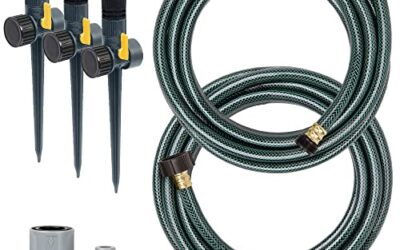
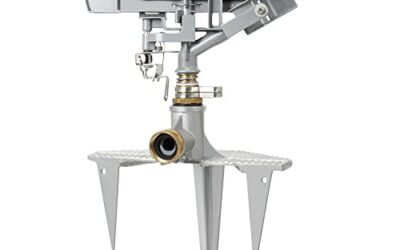
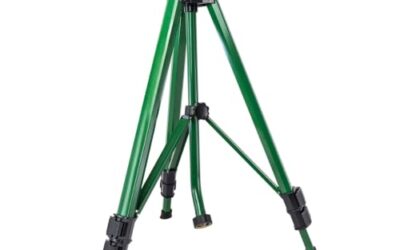
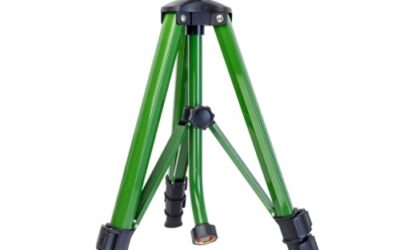
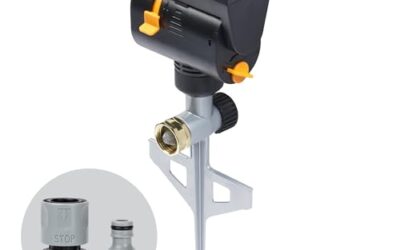
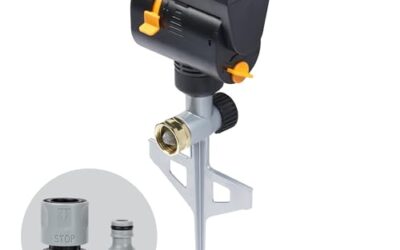
Bare dirt is soft, especially after the first watering, and a sprinkler that tips or creeps will dump water in one spot and wash seed away. A weighted base or a wide sled base sits flat on level ground and resists tipping, while a step spike anchors directly into the soil and holds its position on slopes and uneven patches. Spike bases are particularly useful on freshly graded dirt, because you can push the spike in and the sprinkler stays exactly where you put it. Check the listing for base type and weight, and avoid tall, top-heavy designs on soft ground unless they have a spike or a tripod with legs you can push firmly into the soil.
Which One Fits Your Situation
You seeded a large rectangular lawn from bare dirt
Choose a full-size oscillating sprinkler with a weighted or sled base and separate width and range controls. The oscillating fan covers a rectangle evenly, the fine droplets keep seed in place, and the controls let you narrow the pattern as the lawn fills in. Set it in the middle of the patch, dial the range so the spray just reaches the edges, and run short sessions several times a day.
You overseeded bare patches in an existing lawn
Choose a compact oscillating sprinkler on a step spike, or a small circular spray head you can aim at one patch at a time. Bare patches are usually small and scattered, so a full-size sprinkler would waste most of its water on grass that does not need it. A spike-mounted model pushes into soft soil next to the patch and stays put, and its narrowing control lets you shrink the spray to the size of the bare spot.
Your seeded area is on a slope
Choose a spike-mounted sprinkler with a flow control, and plan on shorter, more frequent sessions than a flat lawn would need. Water running downhill is the main enemy on a slope, and a heavy spray will carry seed with it. A spike base keeps the sprinkler from sliding, a gentle fan avoids dislodging seed, and a low flow setting gives the soil time to absorb water instead of letting it run off.
You need to water several times a day without babysitting
Choose an oscillating sprinkler with a flow control and pair it with a simple hose timer, so short sessions run on a schedule while you are at work or away. New seed dries out fast in sun and wind, and missing a session on a hot afternoon can set germination back by days. A timer removes the guesswork, and a sprinkler with its own flow control lets you set a gentle rate once and leave it.
Common Mistakes
- Watering with a hard jet or an impact sprinkler at full pressure. A strong single stream digs into bare dirt, moves seed into clumps, and leaves bare spots that only become obvious after germination, when it is too late to fix the pattern without reseeding. Always start with the gentlest pattern a sprinkler offers, and turn the flow down at the tap or at the sprinkler until the spray falls like light rain rather than hammering the soil. If you can see soil particles bouncing or small craters forming, the spray is too hard. Stand and watch the first few minutes of watering on a new patch, because that is when damage happens, and adjust the flow before the seed has moved.
- Running one long session instead of several short ones. New seed needs the top half inch of soil to stay damp, and a long soak drives water deep while the surface dries out between waterings, which is the opposite of what germination requires. A long session also creates puddles that float seed away from where you spread it. Short sessions two to four times a day keep the surface moist without runoff, and you can lengthen them gradually once seedlings have rooted and the soil is held together. Think of it as keeping a sponge damp, not filling a bucket, and check the surface with a finger before deciding whether another session is needed.
- Leaving the sprinkler in one place until puddles form. Puddles on bare dirt mean water is pooling instead of soaking in, and seed floating in a puddle will end up somewhere you did not plant it, usually at the lowest edge of the patch. Move the sprinkler as soon as the surface darkens evenly, and come back for another short pass later rather than trying to finish the whole patch in one go. On heavy clay soil this matters even more, because clay absorbs water slowly and puddles form fast. A timer with short cycles helps here, since it stops the water before pooling starts.
- Choosing a sprinkler by maximum coverage alone. A model rated for thousands of square feet is no help if its narrowest pattern still overshoots a small seeded patch and soaks the driveway, because that water is wasted and the patch edges stay dry. Check whether the listing describes width, range, and flow controls that let you shrink the pattern, since the ability to water a small area precisely matters far more than the biggest number on the box. A compact sprinkler that can be dialed down to a few hundred square feet will serve a new patch better than a large one that only knows how to water wide.
- Setting up on a slope without anchoring the sprinkler. A light sprinkler on soft, wet dirt can creep or tip as the ground softens, and a tipped sprinkler dumps its whole flow in one spot, washing a channel through the seed. Use a step spike or a weighted base on slopes and freshly graded soil, press the base firmly into the ground before turning the water on, and check its position after the first few minutes of watering. If the sprinkler has shifted even slightly, reposition it and turn the flow down, because a small shift at the start becomes a washed-out strip by the end of the session.
Frequently Asked Questions
How often should I water freshly seeded dirt?
Water lightly two to four times a day for the first two weeks, keeping the top layer of soil damp but never puddled. Morning, midday, and late afternoon sessions suit warm weather, while cooler or cloudy days may need only two. Once seedlings are an inch tall and rooted, stretch the sessions longer and drop to once a day, then a normal lawn schedule as the grass thickens.
Can I use a regular impact sprinkler on new grass seed?
You can, but it is a risky choice. Impact heads throw a single heavy stream that can displace seed and carve channels in soft dirt, especially at high pressure. If an impact sprinkler is all you have, turn the flow down, keep the throw short, and watch the soil for the first few minutes. An oscillating sprinkler with a fine fan pattern is a safer fit for bare dirt.
Should I water at night to keep seed moist longer?
Night watering is not the best approach for new seed. Soil that stays wet overnight encourages fungal problems, and seedlings benefit more from moisture during the warm daytime hours when they are actively growing. Water early in the morning and again in the afternoon instead, and let the surface dry slightly overnight while the deeper soil stays damp.
When can I switch to a normal watering routine?
Switch once the new grass is about three inches tall, has been mowed at least twice, and resists a gentle tug, which means the roots have anchored into the soil. At that point you can move to deeper, less frequent watering that encourages roots to grow downward. Keep the sprinkler pattern gentle for the first month, and avoid heavy foot traffic on the new lawn until it has filled in.