Key takeaways
- Find the best sprinklers for food plots that cover wide ground, handle low well pressure and keep young seed moist. Five proven picks compared.
A food plot lives or dies on its first few weeks, and rain does not always arrive on schedule. When seed sits in dry soil it waits, and when young plants wilt under a hot sun the whole planting can stall before hunting season or harvest. The decision is not which sprinkler looks strongest on a shelf. It is how much ground you need to wet, how far your water has to travel, and how much pressure your pump or spigot can actually deliver.
This guide is for hunters and land managers planting clover, brassicas, corn, or beans on plots that sit beyond the reach of a garden hose timer. The five sprinklers below were picked from Amazon listings for wide coverage, metal construction, and the ability to keep working with well water and long hose runs. Each one suits a different plot shape, so the right pick depends on your ground, not on a single best label.
Quick Picks
As an Amazon Associate we earn from qualifying purchases.
| Product | Best for | Key spec from title |
|---|---|---|
| Nelson RainTrain Traveling Sprinkler | Largest plots, hands-off watering | Covers up to 13,500 square feet |
| Orbit Tripod Zinc Impact Sprinkler | Tall crops and uneven ground | Throws up to a 90-foot diameter |
| Melnor XT Turbo Oscillating Sprinkler | Long rectangular plots | 20 precision nozzles, 4,500 square feet |
| Rain Bird 25PJDAC Brass Impact Sprinkler | Low-pressure well water | 20 to 41 foot spray radius |
| Orbit H2O-Six Gear-Drive Sprinkler | Odd-shaped plots | Six spray patterns |
How to Choose
Match the pattern to the shape of your plot
Food plots come in circles, rectangles, and long strips cut through timber, and each shape wants a different spray. A round impact head suits an open square clearing, while an oscillating bar lays an even rectangle across a strip planted along a field edge. A traveling sprinkler walks a straight hose path, which fits a long plot better than any stationary head. Before buying, sketch the plot on paper and mark where the hose will sit. A head that throws a 90-foot circle over a narrow strip wastes half its water on the woods, while a rectangular pattern leaves the corners of a square plot dry.
Check your water pressure and flow before anything else
Most food plots sit far from the house, and a long hose run eats pressure before the water ever reaches the head. A sprinkler that needs strong household pressure will sputter on a well pump or a gravity tank, throwing a short, uneven pattern that soaks one corner. Look at the flow and pressure figures on the listing and compare them with what your source can supply. A brass impact head built for low pressure keeps turning when the flow drops, and a gear-drive head holds its pattern steady. If your source is weak, pick the head that tolerates it rather than the one with the biggest coverage.
Choose metal parts when the sprinkler lives outside
A food plot sprinkler spends its life in mud, sun, and standing water, and plastic parts crack, warp, and clog faster than most buyers expect. Cast iron and zinc heads hold their shape through a season of moves, and a brass head resists mineral buildup from hard well water. Check the base as well as the head: a metal sled or a sturdy tripod stays put on soft ground, while a light plastic base tips over the first time a deer brushes past it. A clog-resistant nozzle matters too, since pond and well water carry grit that stops a fine plastic jet cold.
Plan how you will move it between waterings
A plot that needs water every few days means the sprinkler moves a lot, and a heavy cast-iron unit is a chore to drag across a muddy field. Think about the carry: a tripod folds and a sled slides, while a traveling sprinkler moves itself along the hose and only needs to be lifted at the end of the run. Count your hose length as well, because a 200-foot path needs a long hose and a shut-off that stops the water at the end. Pick the setup you will actually move on a hot afternoon, not the one that looks best sitting in the shed.
The 5 Best Options
Nelson RainTrain Traveling Sprinkler

The RainTrain is the pick for a plot too big to cover from one spot. It rides along a garden hose laid across the plot, spraying as it goes, and it shuts itself off when it reaches the end of the hose. That means one setup can water a long strip from end to end while you do other work. Its cast-iron body holds up to rough ground, and three travel speeds let you set how much water each pass lays down.
Specs
- Cast-iron traveling sprinkler with a metal spray arm
- Covers up to 13,500 square feet
- Travels along a garden hose up to 200 feet
- Three speeds: high, neutral, and low
- Automatic shut-off at the end of the hose run
- Three-quarter inch hose connection
- Model 818653-1003
Best for: A large plot that needs watering from one end to the other without moving the sprinkler by hand.
Watch out for: The hose path must be straight and clear of stumps and ruts, or the tractor wheels can stall halfway across the plot.
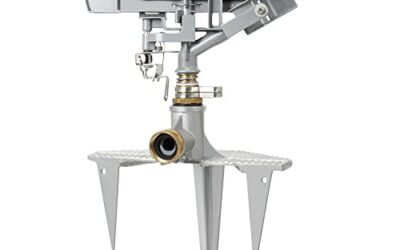
Orbit Tripod Zinc Impact Sprinkler

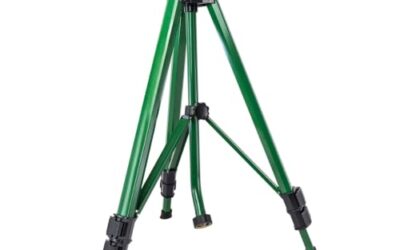
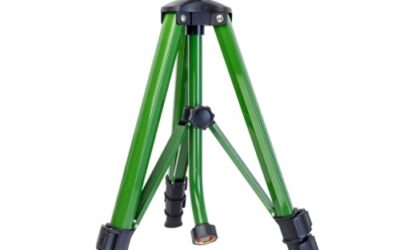
This Orbit pairs a zinc impact head with an adjustable tripod, so the spray starts above the crop instead of fighting through it. That height matters once corn or beans grow tall, because a ground-level head throws water into the stalks and leaves the far side dry. The head turns a full circle or a partial arc, and the deflector shield shapes the spray so it lands where you aim it.
Specs
- Zinc impact head on an adjustable tripod
- Adjustable height from 22 to 48 inches
- Sprays up to a 90-foot diameter
- Covers up to 6,360 square feet
- Adjustable coverage from partial to full circle
- Deflector shield and anti-backsplash arm
- Clog-resistant impact head for dirty or reclaimed water
- Maximum pressure 80 pounds per square inch
- Maximum flow rate 1.8 gallons per minute
- Item weight 3.9 pounds
Best for: Tall crops and sloped or uneven ground where the spray needs to start above the plants.
Watch out for: The tripod legs need firm ground to stand steady, so set it on solid soil rather than soft mud after heavy rain.
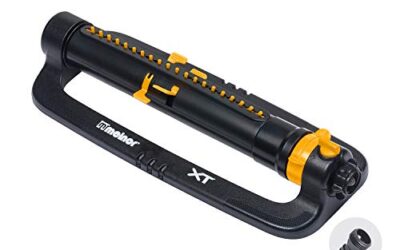
Melnor XT Turbo Oscillating Sprinkler

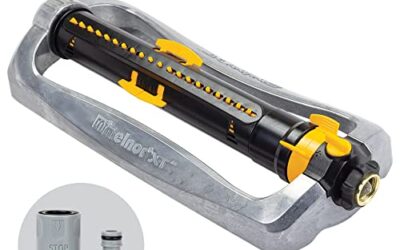
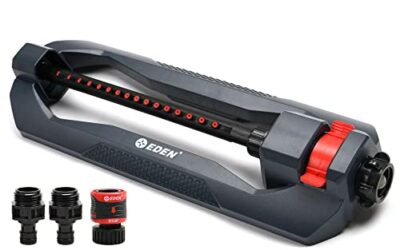
The Melnor XT is built for the long rectangular strips that most food plots turn into, since its bar of nozzles sweeps back and forth in an even rectangle instead of a circle. Twenty precision nozzles spread the water across the full width, and the zoom control narrows the pattern for a fresh seeding or opens it up for a full strip. The metal sled base keeps it from tipping on rough ground.
Specs
- XT Turbo oscillating sprinkler with metal sled base
- 20 precision nozzles
- Covers up to 4,500 square feet
- Three-way adjustable width, range, and flow controls
- Zoom Control adjusts the overall watering area
- Dirt-resistant drive works with well water
- QuickConnect product adapter set included
- Black and yellow finish
Best for: Long, narrow plots planted along a field edge or a logging road.
Watch out for: The rectangular pattern only fits a strip, so measure the plot width first and set the zoom control to match it.
Rain Bird 25PJDAC Brass Impact Sprinkler

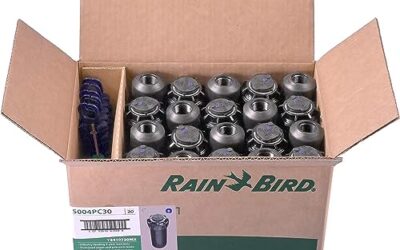
The Rain Bird 25PJDAC is a bare brass head for buyers who want to mount it on their own riser or spike, and it is the toughest head in this group. Brass, bronze, and stainless steel shrug off hard well water and seasons left outside, and the impact arm keeps turning at pressures that stall plastic heads. The pattern adjusts from a narrow sector to a full circle, so one head can serve a corner or a whole clearing.
Specs
- Brass impact sprinkler head, model 25PJDAC
- Brass, bronze, and stainless steel construction
- Adjustable pattern from 20 degrees to 360 degrees
- Spray radius from 20 to 41 feet
- Impact arm drive for steady rotation
Best for: A fixed riser setup on a plot fed by a low-pressure well or gravity tank.
Watch out for: This is the head only, with no spike, tripod, or base included, so budget for a riser or stand that fits your plot.
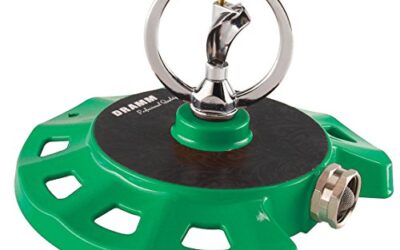
Orbit H2O-Six Gear-Drive Sprinkler

The H2O-Six is the flexible pick, with six spray patterns on a rotating gear-drive head mounted on a metal spike. Small, medium, large, shower, vertical, and flat patterns let one sprinkler shift from a tight corner to a wide circle as the plot changes through the season. The gear drive runs quietly and holds its arc, and the four-position diffuser changes the spray from drops to fine jets. That range covers most plot shapes without buying a second sprinkler.
Specs
- Gear-drive sprinkler on a metal T-spike, model 58573N
- Six spray patterns: small, medium, large, shower, vertical, and flat
- Four-position diffuser for drops or fine jets
- Adjustable collar tabs for partial to full circle coverage
- Sprays up to 80 feet in diameter
- Covers up to 5,026 square feet
- Maximum pressure 65 pounds per square inch
- Item weight 11.2 ounces
Best for: Odd-shaped plots and mixed plantings where the pattern needs to change between waterings.
Watch out for: The spike needs soft enough soil to push in by hand, so check the ground before counting on it for rocky plots.
Which One Fits Your Situation
You have a big plot far from the house
Pick the Nelson RainTrain. Lay a hose down the length of the plot, set the travel speed for how much water each pass should lay down, and let it walk the strip on its own. It covers more ground in one run than any stationary head here, and the automatic shut-off means you do not have to walk back out to turn it off.
Your corn or beans are already knee high
Pick the Orbit Tripod Zinc Impact Sprinkler. Raising the head up to 48 inches puts the spray above the crop so it reaches the far side instead of soaking the nearest stalks. The partial-circle setting also lets you keep the water off the trail or the woods beside the plot edge.
Your plot is a long strip along a field edge
Pick the Melnor XT Turbo Oscillating Sprinkler. Its rectangular sweep matches a strip far better than a round head, and the zoom control lets you narrow the pattern for a new seeding or widen it once the plants fill in across the strip. The metal sled stays put on uneven rough ground.
Your water comes from a weak well pump
Pick the Rain Bird 25PJDAC Brass Impact Sprinkler. The brass impact head keeps turning at low pressure where plastic heads stall, and mounting it on a riser puts it at the right height for the plot. Pair it with a short hose run to keep as much pressure as possible at the head.
Common Mistakes
- Buying the biggest coverage number without checking whether your water source can supply the pressure and flow that head needs.
- Setting a round sprinkler on a long narrow strip, which wastes half the water on the woods and leaves the strip edges dry.
- Leaving a plastic sprinkler out all season, then finding cracked parts and clogged nozzles when the plot needs water most.
- Running one long hose to a far plot and wondering why the spray barely reaches past the head.
- Watering in the heat of the day, when much of the spray dries before it soaks into the soil around the seed.
Frequently Asked Questions
How much water does a new food plot need each week?
New seed needs steady moisture in the top few inches of soil until the roots take hold, which usually means a deep soaking every few days rather than a light sprinkle daily. Watch the soil, not the calendar: if the top layer dries out between waterings, increase the run time or water more often until the plants stand on their own.
Can one sprinkler cover a half-acre food plot?
A half acre is about 21,780 square feet, so a single stationary head will not cover it in one position. The Nelson RainTrain comes closest by walking a 200-foot hose path, while the other picks here need two or three moves to cover the same ground. Plan on moving the sprinkler, not on finding one head that does it all.
Will these sprinklers work with pond or well water?
Yes, with the right head. The Orbit tripod and the Melnor XT both list dirt-resistant drives built for well water, and the brass Rain Bird head resists mineral buildup from hard water. A filter at the hose inlet helps any sprinkler last longer when the water carries grit or algae.
How often should I water a food plot after planting?
Water right after planting to settle the seed into the soil, then keep the top layer damp until germination. Once the plants are up and rooted, switch to longer, less frequent soakings that push moisture deeper and train the roots down. Back off once rain returns so the plot does not stay soggy.