Key takeaways
- Four benchtop laboratory incubators for lab upgrades compared on chamber size, temperature control and power, using only listing-stated specs.
Upgrading a bench usually starts with a simple frustration: the old incubator is too small, too slow to recover temperature, or tied to a single fixed setpoint. The real decision is which class of replacement your work actually needs, because a compact heat-only cabinet, a small unit that also cools, and a 20-litre digital model solve very different problems.


This shortlist is built for three kinds of buyers: teaching and prep labs replacing an ageing general-purpose cabinet, small research benches that need cooling below room temperature as well as heating, and labs that want digital set-and-forget control. Every model below is a benchtop general-purpose laboratory incubator chosen from the names and specifications on its Amazon product page. One boundary is worth stating early: none of these four is a CO2 incubator, and none should be bought as one.
Quick Picks
As an Amazon Associate we earn from qualifying purchases.
| Product | Best for | Key spec from title |
|---|---|---|
| ScitoLAB 10L Laboratory Incubator | Straightforward heat-only bench upgrade | 10L chamber, 110V |
| IVYX Scientific 5L Incubator | Small samples that need cooling as well as heat | 5L, heats and cools |
| Benchmark Scientific MyTemp Mini H2200-HC | Digital control in a compact footprint | Heat and cool, 115V with US plug |
| Quincy Lab 10-140 Analog Incubator | Traditional analog gravity-convection cabinet | 0.7 cu ft, 115V, 120W |
How to Choose
Chamber size and what actually fits inside
Litres alone do not tell you whether your glassware fits. A 5-litre chamber suits petri dishes, small tubes and a handful of plates, while a 20-litre chamber can swallow 2-litre flasks and stacked dishes for a whole class. Check the interior shape as well as the volume: a tall, narrow chamber wastes space for flat plates, and a wide, shallow one limits flask height. If your upgrade is driven by one oversized vessel, measure that vessel against the chamber before you compare anything else.
Heating only, or heating and cooling
A heat-only incubator can never hold a setpoint below the temperature of the room it sits in, which matters more than many buyers expect. Warm laboratories in summer can push ambient air close to common incubation temperatures, leaving a heat-only unit with no control margin at all. Models that actively cool, like the IVYX and the Benchmark below, hold setpoints under ambient and open up cold-storage style work. If your protocols only ever run well above room temperature, heat-only is simpler and usually cheaper to run.
Control type and temperature range
Analog bi-metal controls are rugged and easy to live with, but they ask you to verify the real chamber temperature with your own thermometer and accept some drift around the dial setting. Digital control with a live display removes that guesswork and suits documented work where the setpoint must be recorded. Range matters too: compare the stated span, such as ambient plus a few degrees up to the low sixties, against your actual protocols rather than chasing the widest number on a listing.
Power, placement and daily practicalities
Every unit here runs from an ordinary US outlet, but confirm the exact voltage version before ordering, because several of these models also exist in 220V or 12V variants sold for other markets. Think about where the cabinet will live: forced-air circulation evens out temperature but adds fan noise, while gravity convection is silent and gentler on open plates. Door style counts as well, since a see-through door lets you check cultures without dumping heat and disturbing the chamber.
The 4 Best Options
ScitoLAB 10L Laboratory Incubator
The ScitoLAB is the most direct upgrade on this list: a 10-litre thermostatic cabinet with hot-air circulation, listed for general-purpose laboratory work such as petri dishes and seed germination. Its stated range runs from 35 to 148°F, with maximum heating of 65°C, which covers the everyday incubation band without paying for cooling hardware you may never switch on. For a teaching bench or a small prep room replacing a tired heat-only box, that simplicity is the appeal. It runs on 110V, so it drops onto a standard bench outlet with no electrical work.
Specs
- Chamber volume: 10L
- Temperature range: 35–148°F, as listed (max heating 65°C)
- Convection: hot-air circulation (forced convection), as listed
- Control: thermostatic cabinet, listed for laboratory general-purpose use
- Power: 110V
Best for: Labs replacing a basic heat-only cabinet for dishes and routine warming work.
Watch out for: The listing does not state a shelf count, so check the live page for the shelf arrangement before assuming how many dish stacks it holds; a title variant also mentions 12V/110V, so confirm the voltage version at checkout.
ASIN: B0F2HZ8373
IVYX Scientific 5L Incubator
The IVYX is the smallest unit here and the only 5-litre option, with a thermoelectric design that heats and cools. Its listing states precise control from 0°C to +55°C in 1°C increments, with cooling to roughly 23°C below ambient, which makes it useful for temperature-sensitive samples in warm rooms where a heat-only box would overshoot. The chamber measures 15 × 15 × 25 cm inside, so this is a personal-bench or single-project incubator rather than a shared workhorse. An LED display, an AC cord and a 12V car adapter round out a package aimed at small labs.
Specs
- Chamber volume: 5L (interior 15 × 15 × 25 cm)
- Temperature: 0°C to +55°C in 1°C increments, as listed
- Heating and cooling: cools approximately 23°C below ambient, as listed
- Display: LED
- Power: 110V US version per the listing Q&A; AC cord and 12V car adapter included
Best for: Individual benches and small sample batches that need cooling below room temperature.
Watch out for: Some mirror titles for this unit claim a range up to 65°C, but the listing body and Q&A consistently state 0–55°C, so plan around 55°C and recheck the live listing; also confirm you are ordering the US 110V version, since 12V and 220V variants circulate.
ASIN: B07N7VKGY4
Benchmark Scientific MyTemp Mini H2200-HC
Benchmark’s MyTemp Mini is the digital step up: a 20-litre (0.75 cu ft) chamber with set-and-walk-away digital control, a real-time LED display, and both heating and cooling in a footprint of just 13 × 14.5 inches. Two adjustable, removable shelves and room for bottles and flasks up to 2 litres make it the most flexible shared-bench option here, and it is sold by Amazon with a 115V US plug. Labs documenting setpoints for coursework or quality records will feel the difference from an analog dial immediately. It is the natural upgrade when the old cabinet’s vague temperature is the actual problem.
Specs
- Chamber volume: 20L (0.75 cu ft)
- Control: digital control with real-time LED display; heating and cooling
- Shelves: two adjustable and removable shelves, as listed
- Footprint: 13 × 14.5 in; fits bottles and flasks up to 2L
- Power: 115V with US plug
Best for: Shared benches that want digital setpoints and the largest chamber in a mini footprint.
Watch out for: The listing text does not state a numeric temperature range, so check the live listing for the exact span before relying on a specific low or high setpoint for your protocol.
ASIN: B00B4EWT8W
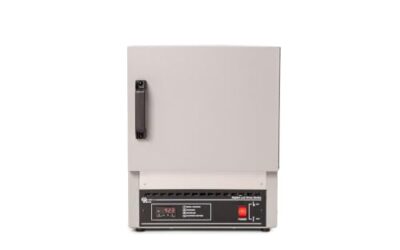
Quincy Lab 10-140 Analog Incubator

The Quincy Lab 10-140 is the traditionalist’s cabinet: 0.7 cubic feet (about 20 litres) of gravity-convection space, an analog bi-metal control, and an acrylic see-through door so you can inspect plates without opening the chamber. Its listing states a range from ambient +2°C to 62°C, one fixed and one adjustable shelf, and a modest 120W draw on 115V. There is no fan and no display, which some labs genuinely prefer for quiet rooms and open-plate work. As an upgrade it suits buyers replacing a similar analog unit who want the same working style in a fresh cabinet.
Specs
- Chamber volume: 0.7 cu ft (approximately 20L)
- Temperature range: ambient +2°C to 62°C, as listed
- Control: analog (bi-metal), as listed
- Convection: gravity convection, as listed
- Door: acrylic see-through
- Shelves: 1 fixed shelf and 1 adjustable shelf, as listed
- Power: 115V, 120W
Best for: Labs that prefer silent gravity convection and visual checks through an acrylic door.
Watch out for: This listing currently has no Amazon-direct price showing, so recheck the live page before relying on it; a review of the listing also notes that its wattage, interior-dimension and shelf-material claims conflict with the maker’s documents, so verify those details on the live listing before ordering.
ASIN: B004SCN0LC
Which One Fits Your Situation
Your old heat-only cabinet finally died
Choose the ScitoLAB 10L. It replaces like with like: a thermostatic, fan-circulated chamber on 110V with a stated range covering routine incubation, and no cooling hardware inflating the design. It is the lowest-friction upgrade for dishes, media warming and general bench work where the previous unit was also heat-only.
Your lab runs warm and setpoints keep drifting upward
Pick one of the two cooling models. The IVYX 5L cools to about 23°C below ambient for small batches at a single bench, while the Benchmark MyTemp Mini gives you the same below-ambient ability in a 20-litre digital cabinet for shared use. Size, not cooling power, is the real dividing line between them.
You need setpoints you can document
The Benchmark MyTemp Mini is the fit. Its digital control and real-time LED display let you set a temperature deliberately and record what the chamber was asked to hold, which analog dials cannot offer. Pair it with your own chamber thermometer for verification and it becomes the most audit-friendly bench in this group.
You want quiet, simple and easy to inspect
Take the Quincy Lab 10-140. Gravity convection means no fan noise and gentler air movement over open plates, the analog control has nothing to programme, and the acrylic door lets you check progress without opening the chamber and losing heat. Just confirm live availability and the maker’s documents first, per its watch-out.
Common Mistakes
- Buying a small incubator for CO2 cell culture when the unit is a general-purpose cabinet with no CO2 control at all.
- Comparing headline temperature ranges across listings without noticing that mirror pages and title variants sometimes state different spans for the same unit.
- Assuming a heat-only incubator can hold a setpoint that sits at or below the room’s summer temperature.
- Ordering the wrong voltage variant of a model that is also sold in 220V or 12V versions for other markets.
- Judging capacity by litres alone and never checking the chamber shape or shelf layout against your largest flask or dish stack.
Frequently Asked Questions
Is any incubator on this list a CO2 incubator?
No. All four are general-purpose benchtop incubators for heating, and in two cases cooling, without any CO2 injection or humidity control system. If your protocol is mammalian cell culture that depends on a controlled CO2 atmosphere, none of these units is a substitute, and you should shop for a dedicated CO2 model through laboratory suppliers instead.
Why do two of these incubators also cool?
Cooling lets an incubator hold setpoints below the temperature of the room, which a heat-only cabinet physically cannot do. That matters in warm laboratories, during summer, and for samples stored a few degrees under ambient. The IVYX reaches roughly 23°C below ambient as listed, and the Benchmark MyTemp Mini also heats and cools, while the ScitoLAB and Quincy are heating-only designs.
How much capacity do I actually need for a bench upgrade?
Match the chamber to your largest routine load rather than your busiest imaginable day. Five litres handles dishes and small tubes for one user, 10 litres covers a modest shared bench, and the two roughly 20-litre cabinets here fit stacked plates and flasks up to 2 litres. Overbuying capacity wastes bench space and slows temperature recovery less than buyers fear, but underbuying ends the upgrade on day one.
Analog or digital control for a teaching laboratory?
Digital control is easier to teach and to document, because the setpoint is a number on a display rather than a position on a dial. Analog bi-metal control, like the Quincy Lab’s, is simple and durable but needs a separate thermometer inside the chamber for verification. For graded coursework with recorded conditions, digital is the safer default; for rough-and-ready prep work, analog remains serviceable.