Key takeaways
- Compare the best shovel for off roading: folding recovery shovels that dig a truck out of sand, mud and snow, pack flat in the rig, and survive real trail use.
Getting unstuck off road usually starts with digging. Traction boards and lockers get the attention, but clearing sand from in front of the tires, cutting a path out of a mud rut or levelling a spot under a wheel is shovel work, and it happens on your knees, in the heat, with whatever you remembered to pack. The best shovel for off roading is therefore not the biggest shovel: it is the one that lives in the vehicle full time, deploys in seconds and survives being used as a lever, a chopper and occasionally a hammer.

This guide compares two folding recovery shovels that meet that brief in different ways — one a modern vehicle recovery design, the other the classic military-style entrenching tool — and then covers the full-size and multi-tool alternatives, the features that actually matter on the trail, and how to carry the shovel so it is there when you need it.
Quick Picks
- Best dedicated recovery shovel: Rhino USA Folding Survival Shovel — a folding shovel built and sold specifically for vehicle recovery kits, sized to stow in a truck or SUV.
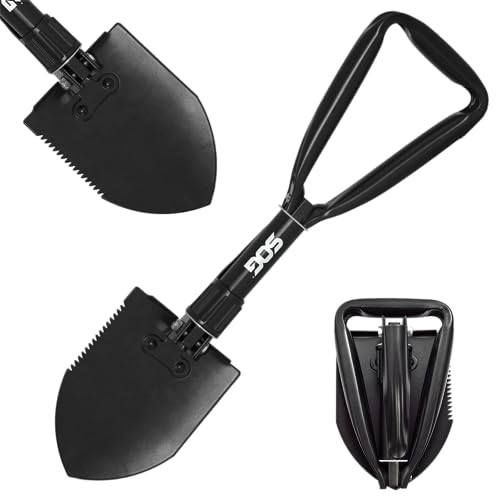
- Best classic entrenching tool: SOG Entrenching Tool F08-N — the proven tri-fold pattern with a serrated saw edge, a pick position and a carry case, at a size that disappears into a recovery bag.
Rhino USA Folding Survival Shovel
See the Rhino USA Folding Survival Shovel on Amazon
Rhino USA sells recovery gear to the off-road market, and its folding shovel (this listing is the black version) is aimed squarely at the vehicle kit rather than the garden. The design folds down for storage in the rig and opens into a working shovel for the jobs that strand vehicles: digging out buried tires, clearing high-centered chassis, moving sand and gravel back under a spinning wheel and scraping a level pad for a jack on soft ground.
The reason a purpose-built recovery shovel earns the top spot is the combination of stowage and readiness. A shovel that lives under a seat or in a recovery tote gets used; a full-size shovel left in the garage does not. Folding designs also keep the blade from rattling around the cargo area or poking through upholstery. Rhino USA sells this shovel through its own Amazon storefront as part of its recovery line, alongside the straps and hitch gear the brand is known for, which makes it easy to kit out from one source.
Treat it the way you would any recovery tool. Rinse mud and sand out of the folding joint after a trip so grit does not grind the pivot, work the mechanism a few times a season so it never seizes shut, and store it somewhere reachable without unloading the whole vehicle — a stuck truck rarely lets you dig through cargo to find the tool meant to free it.
Best for: overlanders and trail drivers who want a shovel that is part of the vehicle’s permanent recovery kit.
SOG Entrenching Tool F08-N
See the SOG Entrenching Tool on Amazon
The SOG F08-N follows the tri-fold entrenching pattern that has been issued to soldiers for generations, refined with modern materials. Open, it measures 18.25 inches; folded, it shrinks to about 10 inches and rides in the included carry case. The blade is tempered high-carbon steel with a powder-coated finish, one edge is serrated as a wood saw for cutting small branches and kindling, and the three-way folding head locks as a straight shovel or angles into a hoe position for pulling material toward you. Total weight is 24.5 ounces, light enough that carrying it in a daypack on a hike away from the vehicle is realistic.
That versatility is the argument for the SOG. Around a stuck vehicle it digs and rakes; around camp it cuts brush, clears a fire pit and digs drainage. The triangular grip handle gives a secure hold with gloves on, and the all-steel construction tolerates the prying and chopping that destroy cheap folding shovels with plastic joints. The trade-off is size: an 18-inch tool moves less material per stroke than a full-length shovel, so deep sand recoveries take longer. For most self-recovery situations — freeing tires, clearing a diff, building a ramp of gravel — it is enough tool, and it is the one most likely to actually be in the truck.
Best for: drivers who want one compact tool that covers recovery digging and camp chores, and who value the proven entrenching pattern.
The Other Shovel Styles Worth Knowing
Full-length trail shovels with fixed handles move the most material and double as pry bars, which is why dedicated off-road builders mount them on racks and bumpers. Brands such as DMOS and Krazy Beaver build premium versions for exactly this role. They are the best digging tools and the worst stowage problem: they need an exterior mount, they live in the weather, and they are sold largely through the makers’ own stores rather than Amazon marketplace listings, so verify the channel before buying.
Multi-function survival shovels extend a folding shovel with a modular handle containing tools such as a fire starter, a small blade or a glass breaker. They suit compact emergency kits, but every added joint is a potential flex point under heavy digging loads, so check how the head locks before trusting one for recovery work.
Cheap stamped-steel folders copy the military pattern with thin metal and loose pivots. They fold once and bend forever. The two picks above exist because this category fails exactly when it is needed.
How to Choose a Shovel for Off Roading
Digging power versus pack size
Be honest about your terrain. Sand and snow recoveries are about moving volume quickly, which favors a bigger blade; mud and rocky ground are about cutting and prying, which favors a strong head and a hoe position. Most drivers are best served by a quality folding shovel carried always, plus traction boards, rather than a large shovel carried sometimes.
Head material and locking
Look for steel heads — high-carbon or alloy steel — with a positive locking collar or threaded lock that holds the blade straight and at an angle without wobble. If the listing does not describe how the head locks, that silence is your answer about its recovery capability.
Handle and grip
A D-handle or triangular grip lets you pull material toward you and work in the hoe position without the shaft twisting in a gloved hand. Straight shafts pack smaller. Either beats a loose pistol grip on a tool you will lean your weight onto.
Carry method
Decide where the shovel lives before buying: under a seat, in a recovery tote, on a tailgate panel or on an exterior mount. Folding shovels with a case keep mud off the interior after use, which matters more than it sounds on the drive home. Whichever spot you choose, fix it in place rather than leaving it loose: an unsecured steel tool slides, rattles and becomes a hazard in a sudden stop, and a shovel buried under camping gear at the moment the truck bellies out in sand might as well be back in the garage.
Frequently Asked Questions
Is a folding shovel strong enough for vehicle recovery?
A well-built steel folder, yes. Recovery digging is mostly clearing tires and chassis, not excavating; the loads are moderate and both picks here are steel tools with locking heads. What folding shovels cannot do is replace a full-size shovel for deep, prolonged digging.
What else should be in the recovery kit with the shovel?
Traction boards, a rated recovery strap and shackles, gloves, a tire deflator and a compressor cover most self-recovery situations. The shovel’s job in that kit is preparation: clearing the path those tools need to work.
Can I dig out a high-centered truck with an entrenching tool?
Yes, working in the hoe position to pull material out from under the frame and differentials. It is slower than a long shovel, which is why you clear just enough to get the chassis off the obstacle and let the tires find ground.
How do I stop a folding shovel seizing up?
Clean the pivot after muddy or sandy use, dry it before storage, and cycle the mechanism periodically. Grit left in the joint is the main cause of folders that will not open on the trail.
Using the Shovel Well When You Are Stuck
Technique matters as much as the tool. When a tire is buried, resist the urge to dig straight down beside it; the goal is a ramp, not a hole. Clear material from in front of and behind the tire in the direction you intend to drive, sloping the excavation so the tire can climb out progressively, and clear the path for the other tires on the same axle before they follow into the same trap. If the chassis is high-centered, the shovel’s job is the material under the frame and differentials — this is where the SOG’s hoe position earns its keep, pulling spoil out from under the truck while you lie alongside it rather than trying to lift it out with a straight blade.
Work in short spells and reassess. Sand and mud refill excavations as you dig, so alternating digging with gentle throttle attempts — rocking the vehicle a few inches at a time — often frees a truck faster than one heroic excavation. Airing the tires down before the attempt widens the footprint and reduces how much the tires dig on the next attempt, and the shovel then clears the smaller amount of material that remains. Finally, fill in what you dug. Leaving a crater in a trail or a beach access harms the surface for the next driver and, in many areas, breaches the land manager’s rules; two minutes with the shovel on the way out is part of the recovery, not an afterthought.
The Bottom Line
Carry the shovel you will actually have with you. The Rhino USA folding shovel is the pick for a dedicated vehicle recovery kit, and the SOG F08-N is the pick for a compact all-rounder that also earns its place at camp. Both are steel, both fold flat, and both will be in the truck on the day the trail decides you need one.
Disclosure: As an Amazon Associate, this site may earn from qualifying purchases made through links in this article, at no additional cost to you.