Key takeaways
- Five laboratory drying ovens compared for academic labs, from compact digital benchtop models to large forced-air units for shared research spaces.
Buying a drying oven for a university or college laboratory is rarely about raw heating power. The real decision is how the oven survives academic life: back-to-back teaching sections drying class sets of glassware, research groups sharing one bench, and a facilities sign-off that cares about circuits, clearances, and safety cut-outs. An oven that suits a single researcher can bottleneck a teaching lab by the second week of term, while an oversized unit wastes bench space a department cannot spare.
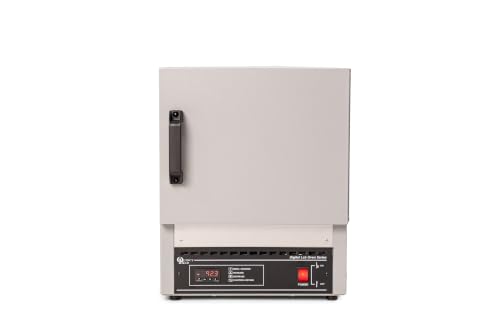

This guide is written for lab managers equipping teaching laboratories, technicians running departmental prep rooms, and research groups that dry samples and glassware daily. Every pick below is a laboratory drying oven currently listed on Amazon US, chosen from the product names and specifications on its listing page, and the five models span compact digital benchtop units through large forced-air ovens for shared spaces.
Quick Picks
As an Amazon Associate we earn from qualifying purchases
| Product | Best for | Key spec from title |
|---|---|---|
| Quincy Lab 10GCE Digital Gravity Convection Oven | Teaching labs that need a setpoint students can read at a glance | 0.7 cu ft chamber, digital PID control, up to 450°F |
| GBHJJ 15.6L Constant Temperature Blast Drying Oven | A single prep bench with limited space | 15.6L forced-air chamber, digital display, ±1°C accuracy |
| SODONAD 45L Horizontal Electric Blast Drying Oven | Departments drying full class sets of glassware | 45L forced-air chamber, up to 572°F, 110V |
| Quincy Lab 30GC Hydraulic Gravity Convection Oven | Workshops that want a simple, repairable analog oven | 2.0 cu ft chamber, hydraulic thermostat, 1200W |
| GBHJJ 70L Constant Temperature Blast Drying Oven | Shared research labs with all-day drying loads | 70L forced-air chamber, digital display controller |
How to Choose
Chamber Size and Shelf Throughput
Capacity decides whether an oven keeps up with a teaching timetable. A compact chamber around 15 to 20 litres handles one researcher’s beakers and watch glasses, but a class set of thirty flasks needs a 45-litre or larger chamber with at least two shelves. Check the shelf count and the rated load per shelf on the listing, not just the headline volume, because tall flasks and drying racks eat usable height fast. Departments should size for the largest regular load, then confirm the exterior footprint still leaves the bench space staff need for unloading hot glassware safely.
Gravity or Forced-Air Convection
Gravity convection ovens move air by natural rise, which is gentle on powders and lightweight samples that a fan could disturb. Forced-air models circulate heated air with a fan, drying wet glassware faster and holding more even temperatures across crowded shelves. Teaching labs that mostly dry washed glassware usually benefit from forced air, while analytical work with fine powders often suits gravity units. Neither design is universally better; match the airflow to what actually goes into the chamber each week, and remember that fan models add a moving part that eventually needs servicing.
Temperature Range and Controller Type
Most academic drying happens well below 200°C, so a maximum near 230°C covers glassware and sample drying, while materials and soils work may call for 300°C headroom. The controller matters as much as the range. Analog hydraulic and bi-metal thermostats are simple and repairable but show no digital readout, which makes student setpoints hard to verify. Digital PID controllers display the setpoint, often add a timer, and make standard operating procedures easier to enforce across sections. An over-temperature alarm or independent cut-out is worth insisting on for ovens that run unattended between classes.
Power, Placement, and Safety Sign-Off
Facilities teams will ask three questions before any oven is plugged in: what circuit it needs, where the heat goes, and what happens if the controller fails. Benchtop ovens in this class run on standard 110 to 120V outlets, but a 1200W unit on a shared circuit with other equipment can still trip breakers during practicals. Confirm the wattage and plug type on the listing, keep the clearances the manufacturer specifies, and favour models with over-temperature protection for rooms that sit empty overnight. Sorting these details before purchase avoids an oven that cannot be installed where it is needed.
The 5 Best Options
Quincy Lab 10GCE Digital Gravity Convection Oven
The 10GCE is the compact option for departments that want digital control without giving up bench space. Its 0.7 cubic foot chamber suits a single course’s glassware or a research group’s daily drying, and the digital PID controller shows the setpoint clearly, which helps when demonstrators must check that students have set the right temperature. Gravity convection keeps the design simple, with no fan to wear, and the aluminized steel build is made for institutional use. It fits teaching labs that value repeatable settings and a small footprint over sheer load volume.
Specs
- Model: Quincy Lab 10GCE
- Capacity: 0.7 cu ft (20 L)
- Convection type: Gravity convection
- Control: Digital PID temperature control
- Maximum temperature: 450°F (232°C)
- Voltage: 115V
- Construction: Aluminized steel, made in USA
Best for: Quincy Lab 10GCE — teaching labs that need a readable digital setpoint in a compact benchtop oven.
Watch out for: Gravity convection has no fan, so tightly packed shelves dry unevenly; leave gaps between items and confirm the exterior dimensions against your bench before ordering.
ASIN: B00SYYF7DE
GBHJJ 15.6L Constant Temperature Blast Drying Oven
This 15.6-litre forced-air oven is the smallest pick here, aimed at prep rooms and side benches where a full-size oven will not fit. The fan-driven circulation dries rinsed glassware faster than a gravity unit of similar size, and the digital display controller holds a stated accuracy of ±1°C, with an over-temperature alarm, temperature calibration, and a timing function listed among its features. A synthetic silicone door seal and stainless steel heating tube suit the stop-start rhythm of a teaching day. It is a one-course-at-a-time oven, and departments should treat it as a satellite unit rather than a central workhorse.
Specs
- Capacity: 15.6 L
- Convection type: Forced air (blast) circulation
- Control: Intelligent digital display controller
- Stated accuracy: ±1°C
- Features: Over-temperature alarm, temperature calibration, timing function
- Interior hardware: Stainless steel electric heating tube
- Body: Galvanized material with electrostatic spray shell, synthetic silicone sealing strip
Best for: GBHJJ 15.6L Blast Drying Oven — a cramped prep room that needs fast, fan-assisted drying for small daily loads.
Watch out for: The chamber fills quickly with a class set of flasks; measure your largest trays and racks against the chamber before relying on it for course work.
ASIN: B0CL24MZPP
SODONAD 45L Horizontal Electric Blast Drying Oven
At 45 litres, this horizontal blast drying oven is sized for the departmental middle ground: large enough for class sets, still a benchtop unit. Forced air circulation and an intelligent temperature controller drive temperatures up to 572°F, giving materials and soils laboratories more headroom than the 450°F class. Two adjustable trays, each rated by the listing at 33 lbs, let staff split loads between shelves, and the 110V, 1000W electrical spec keeps installation simple on standard North American circuits. At 71 lbs it is a two-person lift, so plan its final position before delivery rather than after.
Specs
- Model: 101-0AB
- Capacity: 45 L (12 gal)
- Convection type: Forced air, hot air circulation system
- Maximum temperature: 572°F (300°C)
- Control: Intelligent temperature controller
- Power: 110V, 1000W
- Shelves: 2 adjustable trays, 33 lbs capacity each
- Item weight: 71 lbs
Best for: SODONAD 45L Blast Drying Oven — departments drying full class sets that also need occasional 300°C work.
Watch out for: The listing quotes temperatures in Fahrenheit, so confirm your standard operating procedures convert setpoints correctly before students use it.
ASIN: B0DPHG2J32
Quincy Lab 30GC Hydraulic Gravity Convection Oven

The 30GC is the analog workhorse of this group, with a 2.0 cubic foot chamber and a hydraulic thermostat that runs from ambient +25°F up to 450°F. There is no display to fail and no fan to service, which is exactly why many workshops and long-running teaching labs keep ovens like this for decades. Heavy-duty shelves rated at 30 lbs each handle dense loads of crucibles, trays, and glassware, and the 1200W element brings the larger chamber up to temperature. Departments that log setpoints for assessed coursework will need a separate thermometer routine, since the dial alone records nothing.
Specs
- Model: Quincy Lab 30GC
- Capacity: 2.0 cu ft
- Convection type: Gravity convection
- Control: Hydraulic thermostat, ambient +25°F to 450°F
- Power: 1200W
- Shelves: Heavy-duty, rated 30 lbs each
- Product dimensions: 14.25 x 20 x 25.5 inches
- Warranty: 2-year warranty listed by the manufacturer
Best for: Quincy Lab 30GC — facilities that want a large, simple oven with minimal electronics to maintain.
Watch out for: Analog dial control has no timer or digital readout, so verify the dial’s graduations are fine enough for your most temperature-sensitive drying tasks.
ASIN: B006H8KCTI
GBHJJ 70L Constant Temperature Blast Drying Oven
The 70-litre GBHJJ is the shared-research option, built for labs where several groups dry samples and glassware through the day. Forced air convection with a two-speed design moves heat evenly through the larger chamber, and the intelligent digital display controller uses microcomputer control with an over-temperature alarm for unattended runs. The chamber and body combine stainless steel with galvanized sheet for corrosion resistance against wet loads, and the door sealing strip is replaceable, which matters on an oven opened dozens of times a day. Confirm the bench or floor position first, since a chamber this size dominates a small room.
Specs
- Capacity: 70 L
- Convection type: Forced air convection, two-speed operation
- Control: Intelligent digital display, microcomputer temperature control
- Safety: Over-temperature alarm
- Construction: Stainless steel and galvanized sheet
- Door seal: Replaceable sealing strip
Best for: GBHJJ 70L Blast Drying Oven — shared research laboratories with continuous, mixed drying loads from several groups.
Watch out for: The listing’s title gives limited electrical detail, so verify the wattage and plug configuration on the product page before committing a shared circuit to it.
ASIN: B0CL1Z6P1F
Which One Fits Your Situation
You Run Back-to-Back Teaching Sections
Throughput and a setpoint students cannot misread are your priorities. The Quincy Lab 10GCE gives each section a digital display to verify at the door, and its compact chamber turns over small loads quickly between classes. If your sections dry full class sets at once, step up to the 45-litre SODONAD so washed glassware from one session is dry before the next group arrives.
You Have One Free Bench in a Prep Room
Space decides this one. The GBHJJ 15.6L is the only pick that behaves like a satellite appliance, sitting on a side bench and handling the day’s rinsed glassware with fan-assisted speed. Its over-temperature alarm and timer suit a room that is staffed intermittently. Measure the bench depth and your largest rack first; if either fails the check, the 10GCE is the next smallest step.
Your Research Group Shares One Oven All Day
Mixed loads from several people reward chamber volume and even airflow. The GBHJJ 70L spreads work across a large forced-air chamber, and its replaceable door seal suits constant opening. Groups whose loads are mostly heavy trays of samples should also consider the Quincy Lab 30GC, whose shelves are rated at 30 lbs each and whose analog design tolerates rough institutional handling.
You Dry Soils, Sands, or Materials Samples
Higher setpoints separate this group from glassware-only labs. The SODONAD 45L reaches 572°F (300°C), the highest maximum in this guide, while still running on a 110V circuit. Pair that headroom with its two adjustable trays for layered sample pans. If your protocols never pass 232°C, the Quincy models cover the same work with simpler controls and US-made construction.
Common Mistakes
- Buying by headline capacity without checking shelf count, shelf spacing, and the rated load per shelf against real class sets of glassware.
- Putting a gravity convection oven on glassware duty for back-to-back classes, then discovering how slowly still air dries a crowded chamber.
- Forgetting the circuit: a 1200W oven sharing a bench circuit with hotplates and stirrers will trip breakers mid-practical.
- Choosing analog dial control for assessed coursework that requires students to set and record exact temperatures.
- Skipping the facilities conversation about clearances, heat exhaust, and unattended running until the oven is already delivered.
Frequently Asked Questions
What Size Drying Oven Does a Teaching Lab Need?
Start from the largest single load, not the room size. One course’s hand glassware fits in 15 to 20 litres, while full class sets of flasks and beakers usually need 45 litres or more across two shelves. Check shelf spacing for your tallest flasks, because headline volume says nothing about usable height between shelves.
Is Gravity or Forced-Air Convection Better for Drying Glassware?
Forced air is usually the better glassware choice because the fan evens out temperature across crowded shelves and shortens drying time between classes. Gravity convection suits powders and light samples that moving air could disturb, and its fan-free design is simpler to maintain. Match the airflow to the load you dry most often.
Can a Laboratory Drying Oven Sterilize Instruments?
Dry-heat sterilization demands specific combinations of high temperature and long holding times, and it is a validated process, not a side effect of drying. The ovens in this guide are sold for drying, baking, and heat treatment. If sterilization is required, confirm the protocol your institution follows and whether the oven’s listed range and controller can hold it.
What Temperature Should Laboratory Glassware Be Dried At?
Most departments dry washed glassware somewhere in the 60 to 110°C band, hot enough to evaporate water promptly without stressing glass or damaging plastic coatings and graduations. Always follow the glassware manufacturer’s guidance and your own standard operating procedures, and keep heat-sensitive items such as volumetric ware out of high-temperature cycles unless the procedure allows it.